-
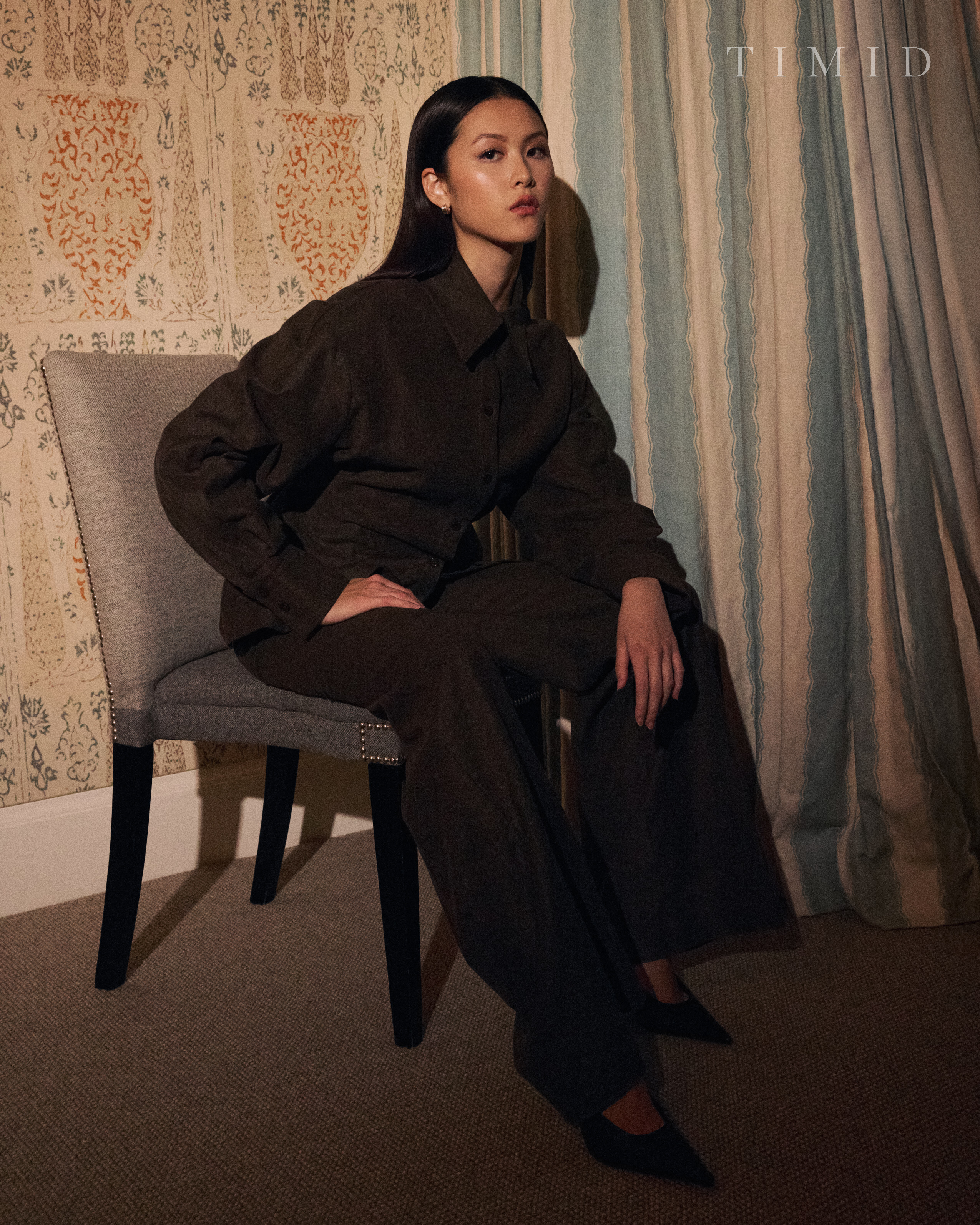
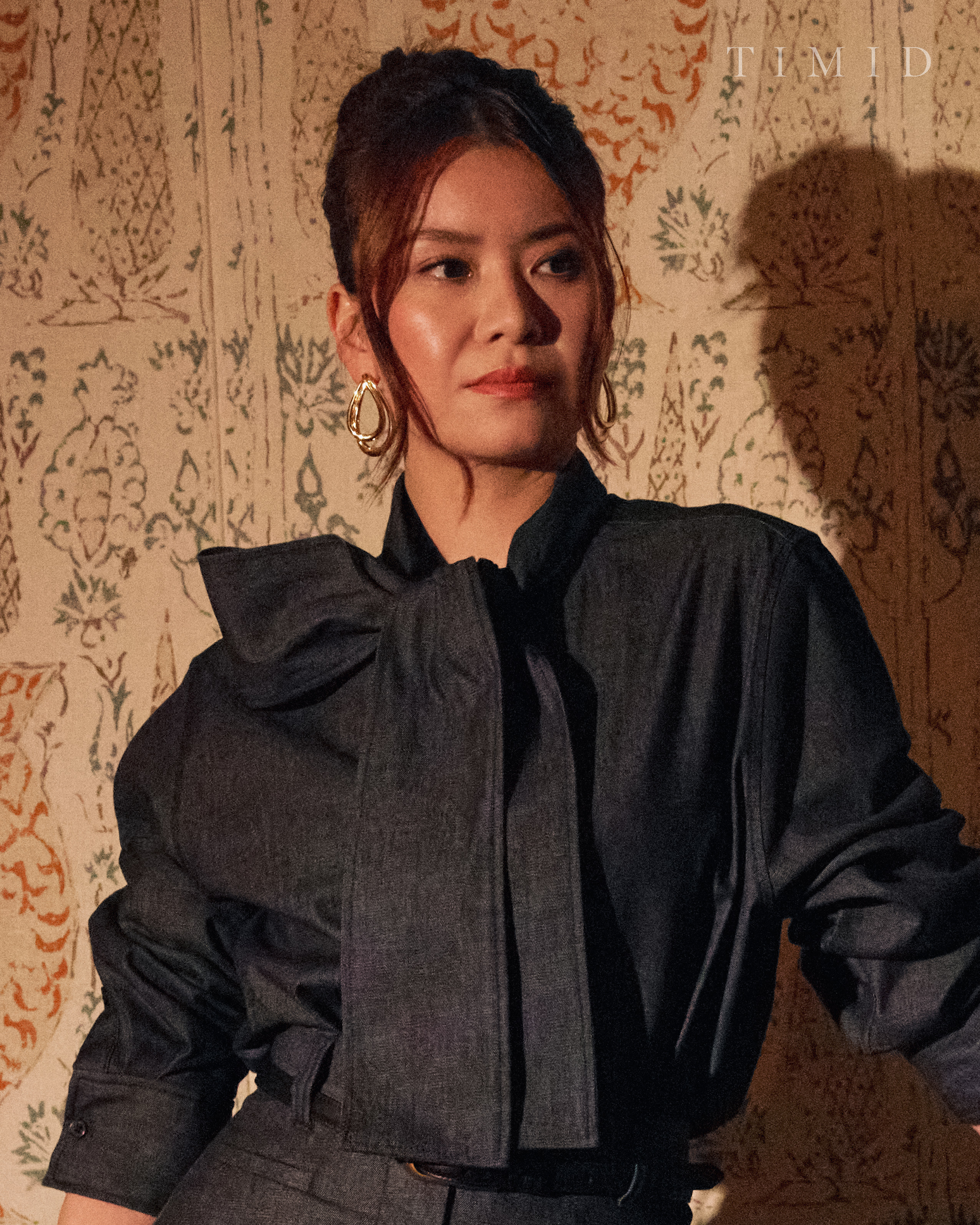
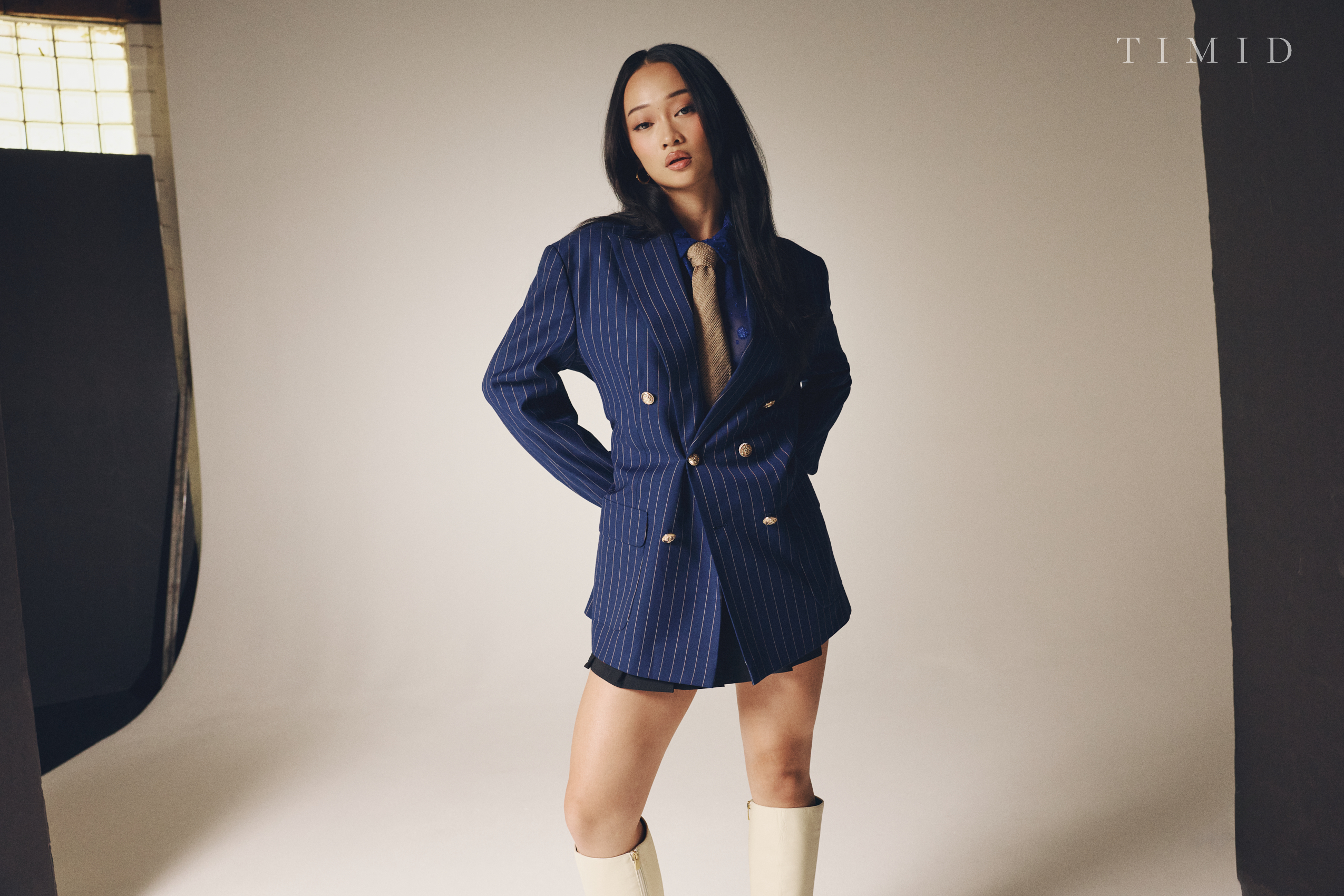
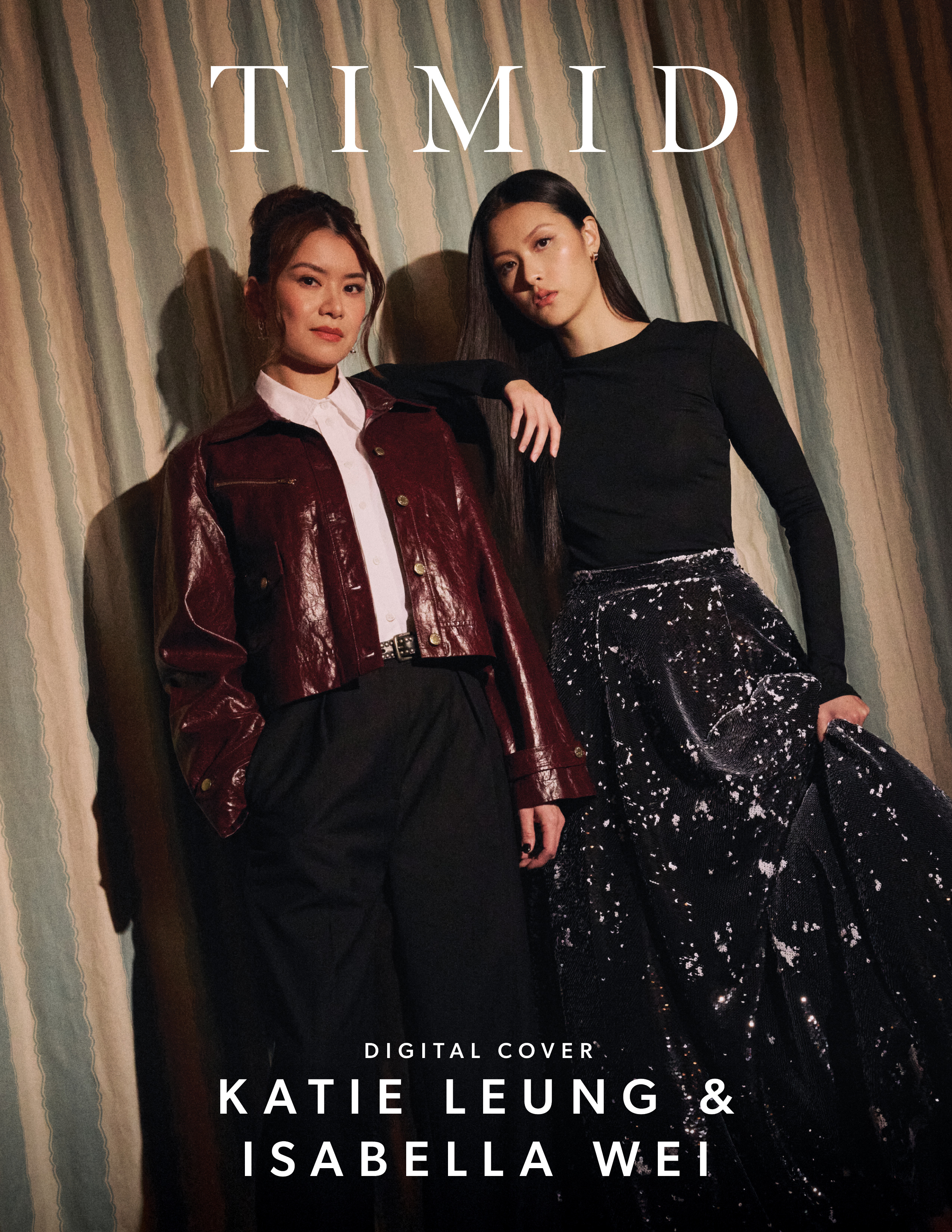
Talents: Katie Leung @_katieleung_ & Isabella Wei @izabearlur
EIC & Photos: Henry Wu @hello.henry
Fashion: Charlie Schneider @charlieschneiderjacobson
Makeup: Gabbie Lee @gabbiemakeup (Katie) Francesca Brazzo @francescabrazzo (Isabella)
Hair: Ross Kwan @rosskwan (Katie) Patrick Wilson @patrickwilson (Isabella)
In its fourth season, Netflix’s Bridgerton leans fully into a dance of dualities. It’s a theme stitched as intricately as the gowns sweeping across its opening masquerade ball. Into this charged atmosphere arrives Lady Araminta Gun, commanding the room before she even speaks. Played with a steely composure by Katie Leung, she moves with her daughters, the acerbic Rosamund Li (Michelle Mao) and jocund Posy Li (Isabella Wei), at her side. She struts with the singular focus of a Regency mother who understands that marriage is strategy, survival, and legacy all at once. Suitors are to be assessed. And if fortune smiles, perhaps the most eligible of them all, Benedict Bridgerton (Luke Thompson), might be persuaded to look their way.
Unbeknownst to the Penwood matriarch, her stepdaughter orbits that same ballroom. Sophie Baek (Yerin Ha) has slipped into the night in a Cinderella-esque act of rebellion. Hidden behind her mask, she collides with Benedict. What begins as playful countering of quick remarks turns into something enchanted. But like any fairytale, the magic is fleeting. Midnight comes quickly in Mayfair. Once the masks are removed, reality crashes in with the force of social law. Sophie is not a mysterious heiress but a maid. She is the daughter of a deceased mistress, someone the ton would deem illegitimate and invisible. He is a Bridgerton, bound by bloodline and expectation. The pair become entangled in a delicate choreography of yearning and yielding, caught in a union that society deems impossible.
It is precisely this brutal social arithmetic that ossifies Araminta. Leung eschews the "wicked stepmother" trope. “I was blessed with so much nuance,” Leung tells Timid. “It was important to humanize her, not just paint her as a villain we’ve seen time and time again. She has layers that helped me empathize with her decisions.” For Leung, the entry point was the primal instinct of motherhood. “As a mother as well, in real life, I can resonate with the fear of having children, needing to protect them, but not protect them too much, because you want them to learn and to grow.” Araminta’s methods may skew toward control rather than compassion. “She’s a bit more hands-on,” Leung admits with a knowing smile, contrasting it with her own style toward gentler parenting. But the intention, she insists, comes from love. In a society where one misstep can cost a woman everything, Araminta clamps down tighter.
Perhaps this mentality is most palpable in a pivotal flashback depicting the memorial service of Sophie’s father. Araminta finds a flickering of hospitality to her stepdaughter. “I had to believe what I was saying,” Leung reflects on the scene. “It was one of those rare moments where I think Araminta genuinely believed she was offering an olive branch. She was saying, ‘I can help you here, and the best thing for you is to be invisible.’ It didn’t come from a place of malice. She thought, ‘Okay, I don’t have to help you here, but this is your situation right now.’” In Araminta’s logic, labor is a lifeline. She often vilipends Sophie with verbal lashings, but grants her a place in the world, albeit one confined to the shadows of the scullery.
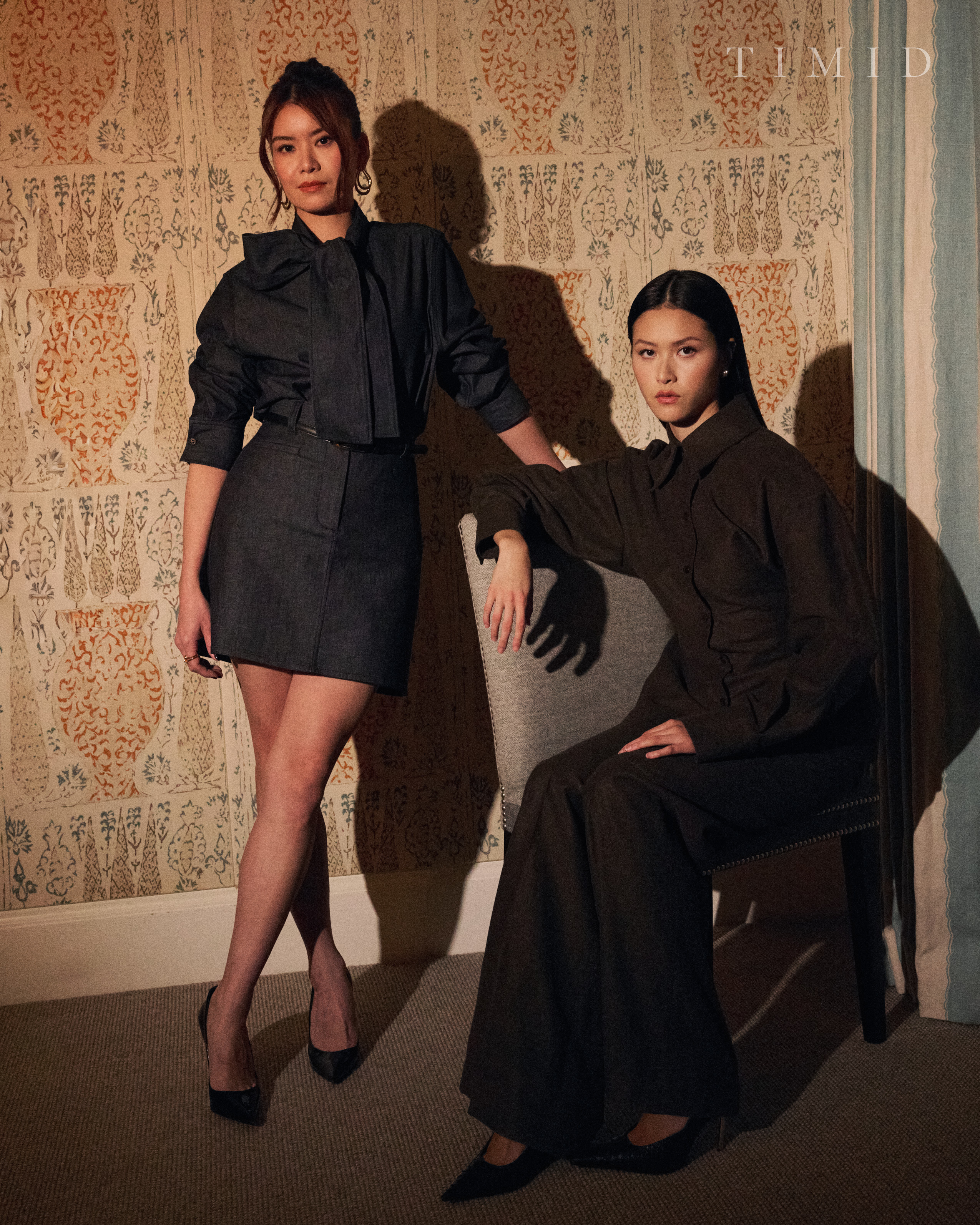
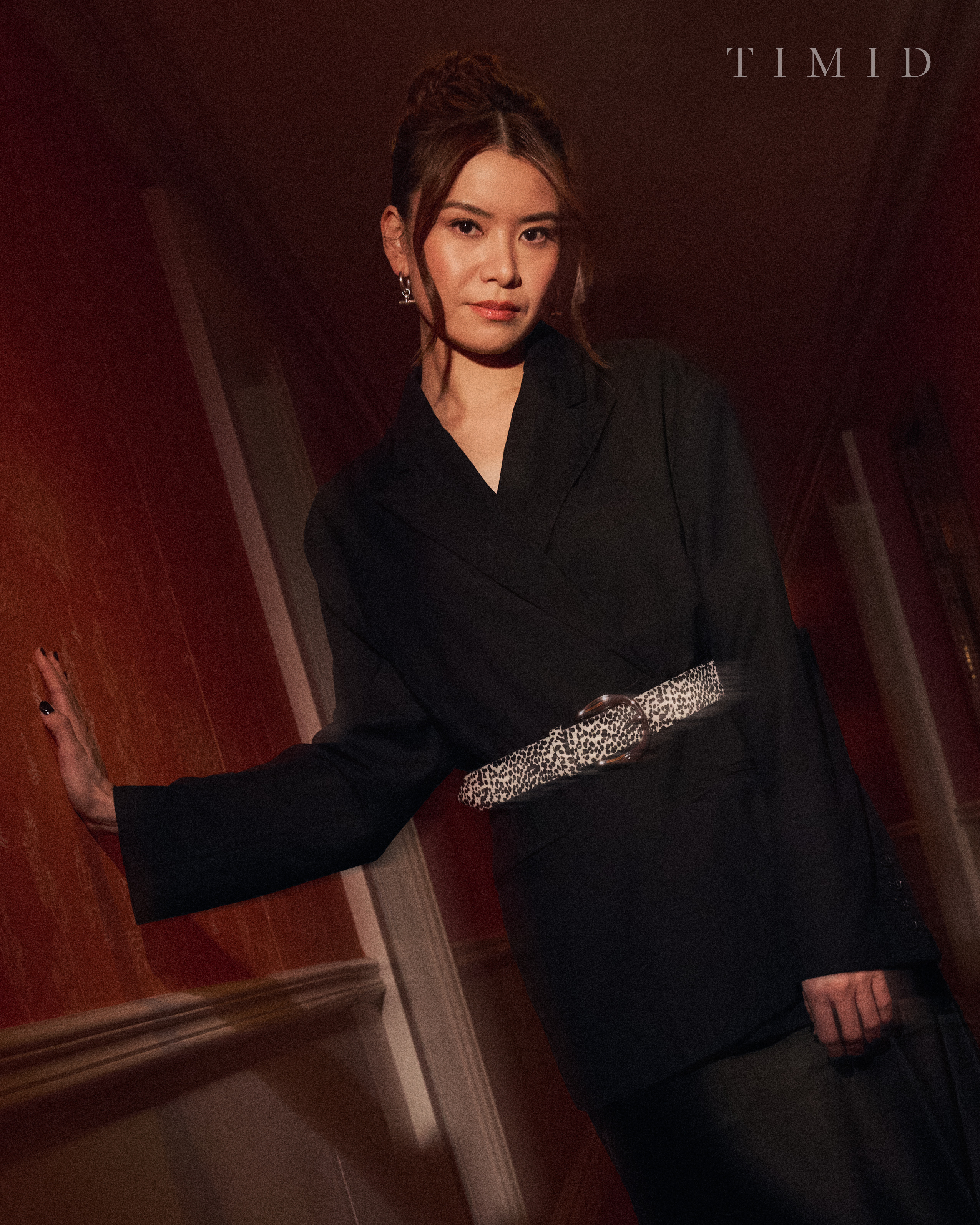
Born in Scotland to parents of Hong Kong descent, Leung drew upon her cultural inheritance to anchor the performance. “I definitely brought a lot of my own cultural background,” she says. “All these things are so ingrained in us… I’m sure some of it’s very subconscious.” She references a sense of filial duty, of responsibility carried across generations. “The older generation aren’t very good at expressing their feelings,” she explains. “And I kind of embraced that for Araminta. She sees it as the opposite of weakness. She sees it as quite a good trait to have—that stiff upper lip. But inside she’s crumbling.”
For many, Leung remains tethered to the image of Cho Chang from the Harry Potter series. Cast at sixteen, she became a landmark of representation, but the role carried a nagging voice. “I felt like being in Harry Potter was a fluke,” she admits. “I felt I needed to compensate for that.” After Hogwarts, Leung took to the stage. Her early insecurities propelled her forward. After landing her first stage job and realizing she “didn’t know what to do with [her] hands,” Leung decided to pursue formal training at the Royal Conservatoire of Scotland. “Theatre has taught me so much about performance, acting, space, energy and keeping things moving,” she reflects. “That’s why I went back to drama school… I was surrounded by actors who had trained, and I thought, even if it was just for the confidence, it would be worth it.” Looking back, she says, “What I got most out of drama school was really just the confidence.”
Her newly forged confidence has guided Leung through a career defined by complex roles. In 2012, she took the lead in Channel 4’s four-part drama Run, portraying Ying, an undocumented Chinese immigrant navigating life in Brixton. The following year, she appeared on stage in The World of Extreme Happiness playing Sunny, a migrant worker confronting the challenges of China’s rapidly modernizing society. In 2014, she starred as Mei in the BBC miniseries One Child, telling the story of a Chinese girl adopted by an American mother and British father who must return to Guangzhou when her birth mother calls on her to help save her son. She has since expanded her range with the crime drama Annika, the Amazon sci-fi series The Peripheral, and her voice work as Caitlyn Kiramman in Netflix’s Arcane, based on the video game League of Legends.
Now 38, she finds playing a matriarch cathartic. “I actually feel seen, because up until recently, I was still playing roles much younger than my actual age, and that’s been kind of weird,” she says. “I think that’s a very Western perspective—I’m not young, and I don’t think my fellow Asians think I look young. I’ve had the experience, and I want to bring that to a role like Araminta, who’s super complicated, and do more of that.”
With that wealth of experience, Leung became a natural mentor to her 21-year-old scene partner. “Katie is so amazing,” Wei says. “She is like one of my favorite people that I’ve ever met, because I think she’s doing it right, like in this industry. She has her priorities straight. She knows what’s important to her, she knows what she likes, and she’s just such a grounded woman… having been in this industry since she was so young, and she never has lost sight of her path. That’s definitely something that I took from her, and what I aspire to be… to always have my priorities straight.”
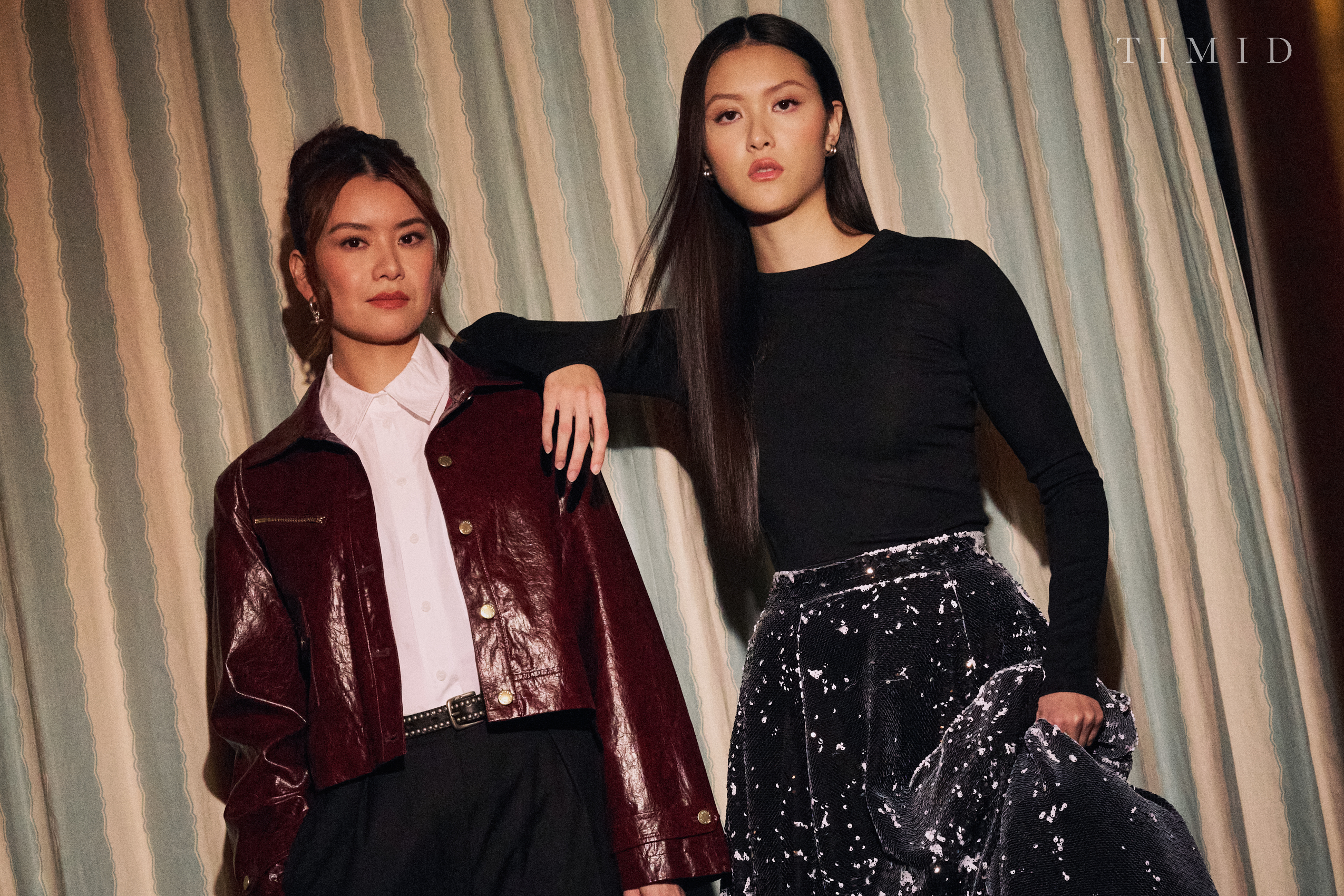
Wei already has a strong start. The Hong Kong-born actress has appeared in Netflix projects like 1899, playing Ling Yi, and Black Doves, as Kai Ming, steadily demonstrating specificity and variety. When it came to taking on Posy, Wei says this role was a rare opportunity to actively choose a character rather than simply audition for whatever came her way. Early in her career, “you audition and you get what you get,” she says. “I think I’ve been really lucky to play characters that have resonated with me and challenged me in multiple ways. But Posy was the first time I really felt drawn to a character and wanted to play this particular person—not for the opportunity, but to share their experiences.” The character’s sunny disposition and playful lightness, she adds, made the process an absolute joy: “Even throughout my auditioning, I was having fun… I knew I was going to have a lot of fun. I like to go for roles that excite me or I feel like will challenge me. So anytime I get an opportunity to do something different or something scary, at first, it's always exciting.”
Posy’s ludic humor shines onscreen. For instance, Posy has an awkward conversation with Benedict about walking across the stage on her hands—something Araminta would disapprove of. “Posy and I are similar in that way,” Wei says. “I’m generally an optimistic person, and I’ve been told I’m too naive and too trusting. But Posy has so much love for everyone. If I were in her position, I don’t know if I could remain that way under so much repression, under a matriarchal figure who doesn’t want you to be yourself. She’s very smart and understands why her mother and sisters behave as they do. She accepts it, which she probably shouldn’t, but she does.”
Playing Posy also gave Wei a space to confront her own insecurities and imposter syndrome. “I’m really used to feeling quite insecure or having a lot of imposter syndrome when I’m on set,” she admits. “But the cast was really accepting, and the role was really fun. I felt very confident on this project, and that was the first time I think I felt that. I don’t want to lose that ever—I want to be able to come into a room and feel like I belong. A big part of that is the people you surround yourself with. But that’s definitely something I’ve learned you can channel if you believe in yourself and tell yourself that you are meant to be there. That’s something I’ll carry with me.”
By the final episodes, Wei’s journey mirrors some of Posy’s own. Posy receives attention from a suitor simply for being herself and she’s emboldened by Eloise Bridgerton to talk to him. She also learns to stand her ground with Araminta. “I think Posy comes into herself a lot and realizes that she can go for what she wants and be her own individual person,” Wei explains. “That changes their relationship, because Araminta is used to Posy being at her beck and call, being whipped into shape. Now Posy, with a little more sense of self and agency, shows Araminta that she can’t just be told off all the time. At some point, either side has to bend—and it doesn’t always have to be Posy."
The dichotomy between mother and daughter is apparent in the character’s costuming as well. “These costumes were actually really freeing,” Wei says of Posy’s wardrobe. “A lot of people assume there are corsets, but the department let us move easily, which was incredibly helpful. I tried to incorporate small, natural tendencies—like picking fingers or biting nails—so she feels like someone living in her own world, unaware of everyone watching her.” For Leung, Araminta’s gowns became a tool for embodying controlled authority. “The costumes did about 80% of the work,” she explains. “As soon as I put it on, I was ready. It was transformative, physically and mentally. There’s a restriction in these gowns, and suddenly you feel repressed. That’s how women in the Regency era had to maintain appearances, pretending everything was fine when it wasn’t. The costume department really helped me inhabit that world.”
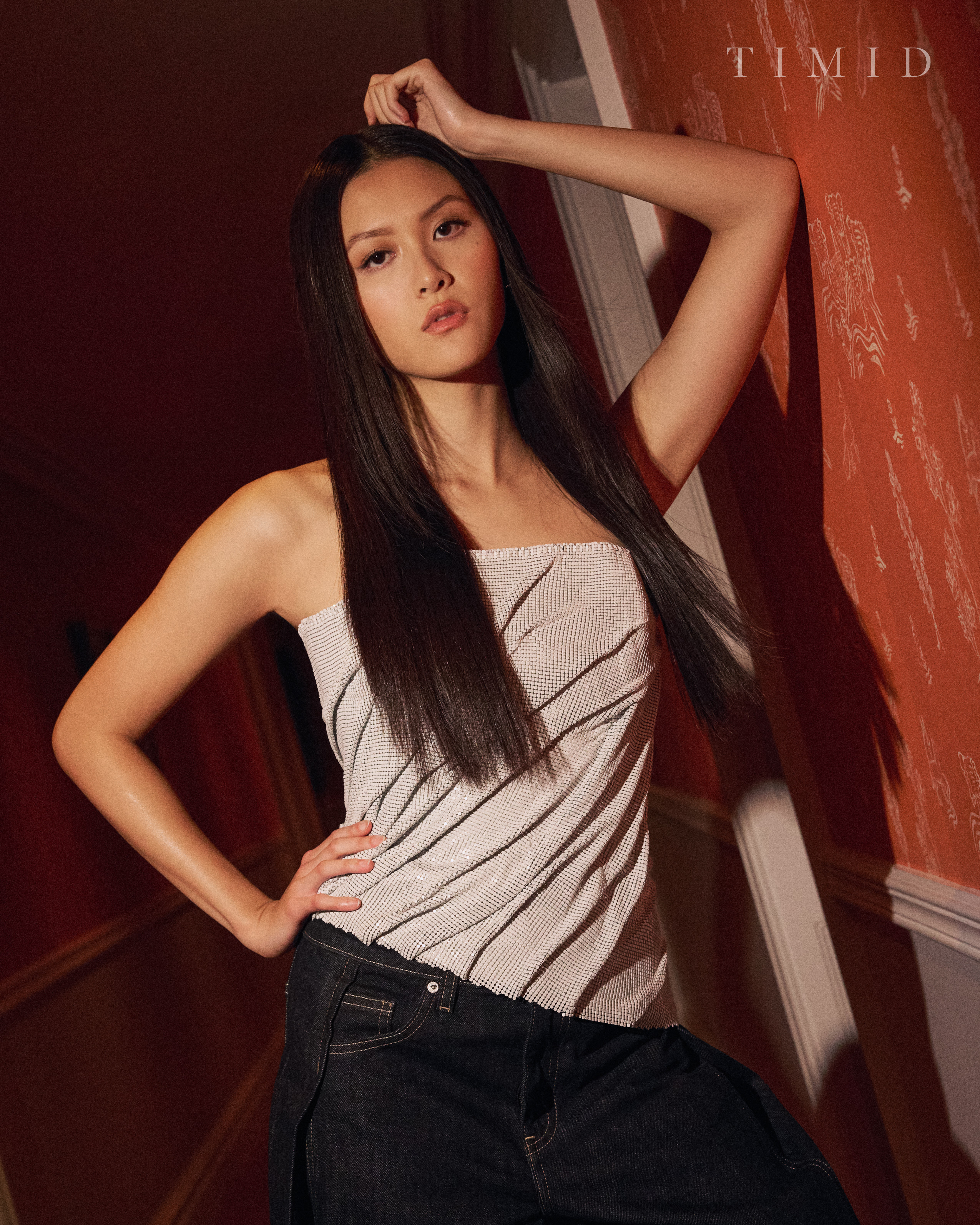
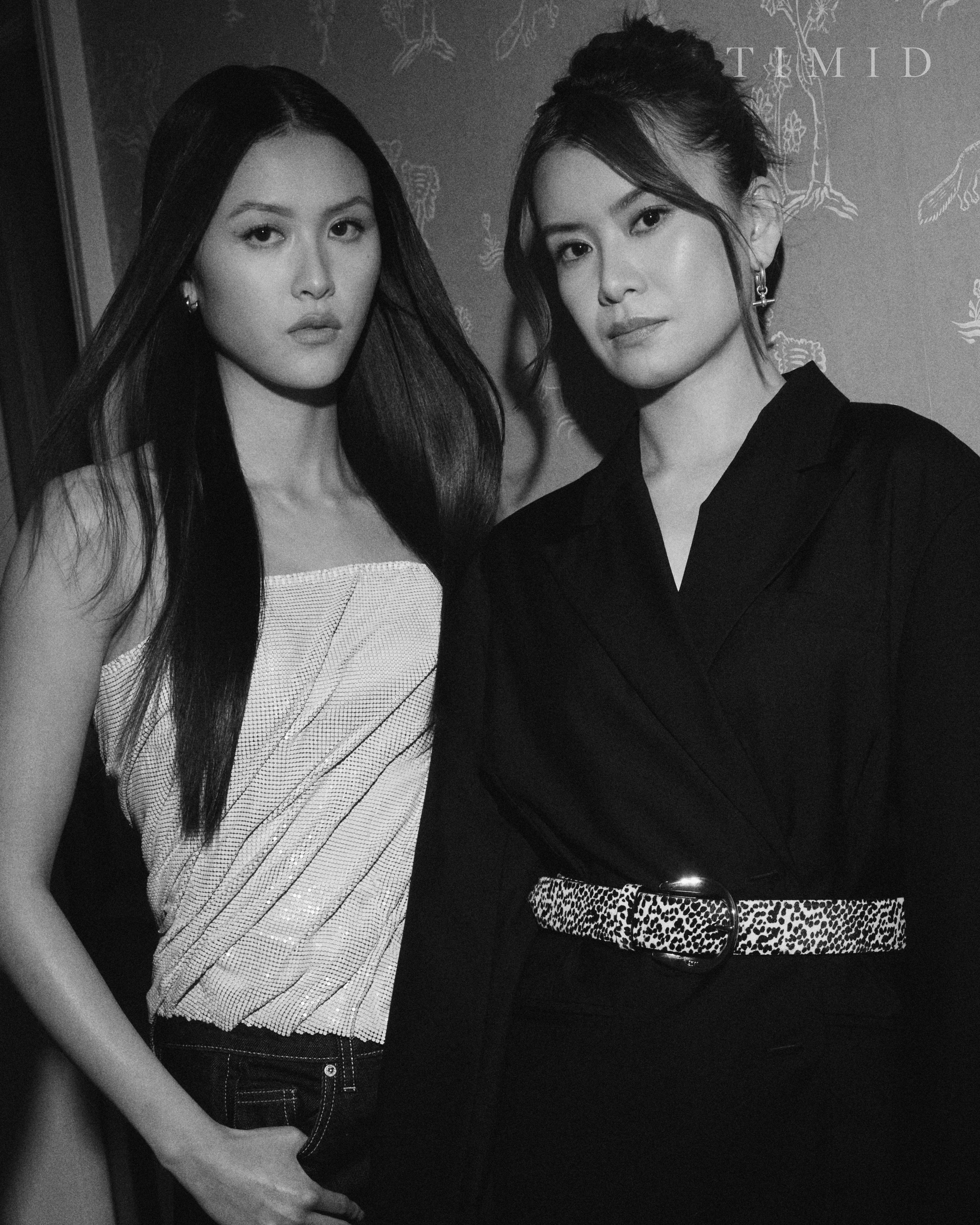
Off-camera, the shared backgrounds of the Penwood house actresses helped them bond. “Both in front of the camera and behind it, the crew and cast were incredibly welcoming,” Leung says. “I was spending most of my scenes with Michelle and Isabella, and we were like a little team. We’re all Asian, from different parts of the world, and that made it really wholesome. We went for hot pot before filming and played mahjong at mine. It was a great start and really helped us connect.”
From its debut, Bridgerton has invited viewers to connect across cultures, drawing them in with a romance that reimagines who gets to stand at the center of a period drama. The series has consistently championed storytelling that reflects a broader globe, and the fourth season trailer offers a visual metaphor for this very shift. Benedict first catches sight of Sophie as she stands transfixed by a grand chandelier; the maid whose very survival depends on an eye for the smallest details, is smitten by the beauty of how a single object can illuminate an entire room. In that moment, she is captivated by the light, and he is captivated by her own.
The announcement of the Penwood trio’s casting carried a similar sense of illumination. For many, myself included, Leung was one of the first actors to make Asian audiences feel truly seen within an imaginative world that meant so much to so many. Watching her evolution from wizarding ingénue to roles grappling with adoption, migration, and now matriarchy feels vivid and nourishing.
This season’s resonance hinges on the very thing Araminta fears most, and what Posy effortlessly manifests: the countercurrent. Bridgerton encourages the belief in love and the defiance of societal expectations that dictate where certain people should flow.
That daring spirit is the heartbeat of the show. “I’m not the sole Asian in the show,” Leung explains. “Apart from the four of us, there are many others behind and in front of the camera who are regulars, and that in itself is beautiful to see. Bridgerton is inclusive not because they need to tick a box, but because they genuinely champion people from all backgrounds.”
Just as Benedict and Sophie come to understand that love requires intentionality, that same ethos pulses through Bridgerton’s crew. Leung saw it firsthand. “While I was shooting, there were so many up-and-coming directors and writers—everybody was given an opportunity,” she says. On a series of this scale, she notes, that kind of creative openness is rare. “Normally on a show this big, that’s unheard of because people don’t want to take risks. That’s the death of art, really. If you’re willing to take that risk and bring people on board who are still learning and growing, you get something refreshing, new, and exciting. I think people should look at Bridgerton as an example for that.”