-
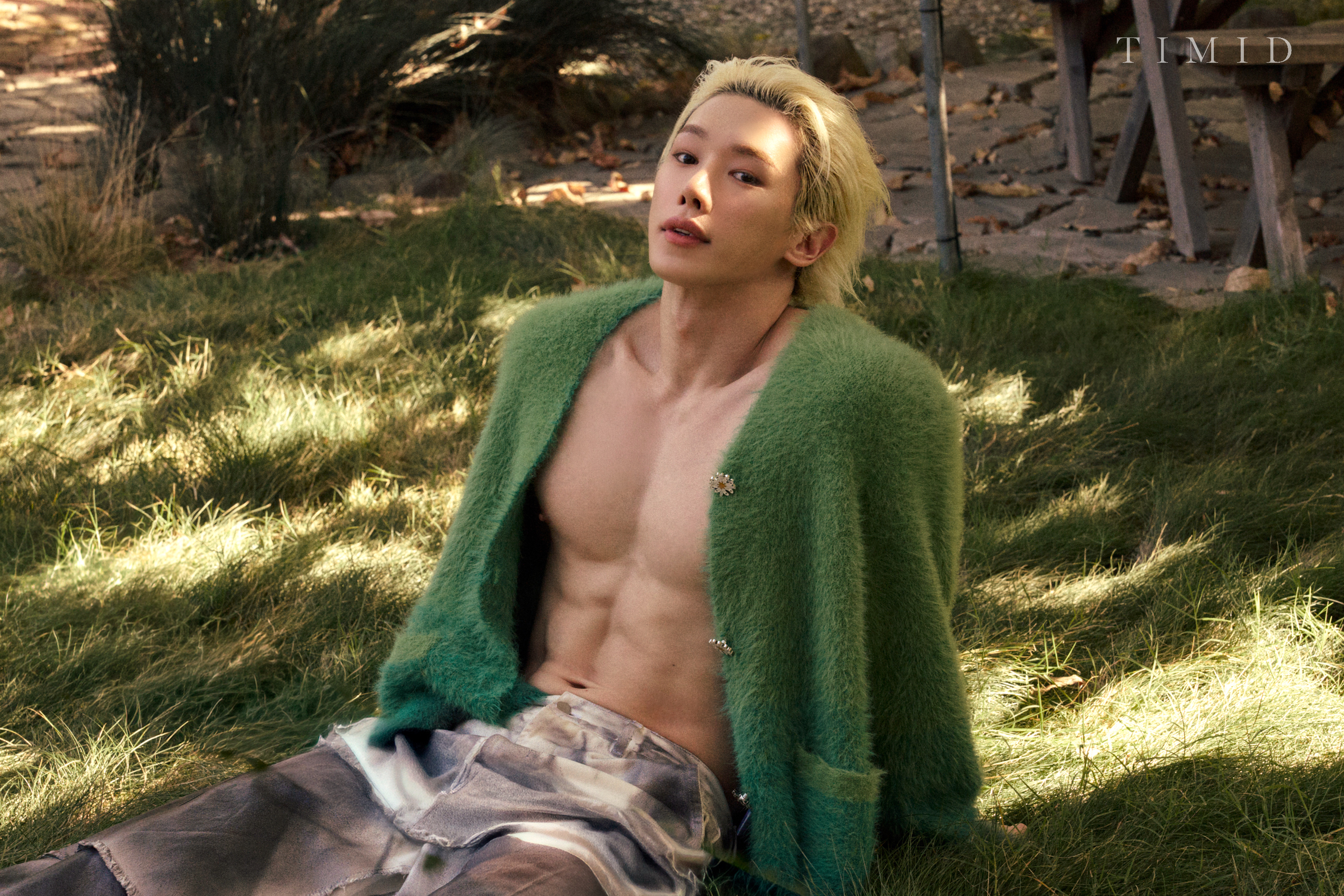
Talent: Sepideh Moafi @sepidehmoafi
Photos: Ken Medilo @kenmedilophoto
Fashion: Benjamin Holtrop @benjaminholtrop
Makeup: Katrina Klein @katrinakleinmakeup
Hair: Sabrina Porsche @sabrina.porsche
Photo Assist: Joshua Medilo @joshua_w_mccoy
Fashion Assist: Emily K.E. Johnson @emilykejohnson, Rasheed Kanbar @rasheedmkanbar
Video Jonathan Ho @_jonathan_ho
Due to a technical hiccup, Sepideh Moafi does something no talent else has done for me in an interview—she takes the initiative and calls my cell directly to get us started. It’s a small gesture, but a telling one. That kind of decisiveness is present with her performance on The Pitt, where she steps in as Dr. Baran Al-Hashimi, the new attending at Pittsburgh Trauma Medical Center. Much to Dr. Robby’s (Noah Wyle) initial annoyance, Al-Hashimi arrives and gets to work.
Al-Hashimi is a doctor willing to push for systemic change, advocating for tools like generative AI to improve efficiency and ultimately give physicians more time with their patients. It’s a forward-thinking approach that doesn’t always sit easily with those around her, but that friction is precisely the point. Through Moafi’s performance, the show explores how other people can be equally committed to care, yet fundamentally different in how they believe it should be delivered.
Off-screen, that perspective feels rooted in lived experience. Born in a refugee camp in Germany after her family fled Iran, Moafi’s journey carries with it an awareness of displacement, resilience, and advocacy. It informs not just the roles she chooses, but how she inhabits them. In Al-Hashimi, she brings a courage to challenge the status quo, offering a timely reminder that progress often comes from those unafraid to ask difficult questions—and, when necessary, make the call themselves.
Sepideh Moafi: It wasn't one particular moment. It was the overall impression of someone who is almost frighteningly high-functioning—someone incredibly competent, detail-oriented, and meticulous. She’s just brilliant. Throughout the process, they gave me a new scene at every step, and each one felt incredibly revealing.
The more I got to know her, the more I fell in love with her. I think what’s unique about her is that she is equal parts intellect and empathy. She is rigorous and deeply skilled. What defines her is that she’s a systems-level thinker with muscular empathy; she sees patients as whole ecosystems shaped by culture, psychology, and socioeconomic forces, rather than just a collection of symptoms. She isn't someone who walks in and dominates a room, but the room definitely sharpens around her.
SM: Interestingly enough, Al-Hashimi is not a Persian name, but they wanted the character to be Persian. I mentioned that Al-Hashimi is actually more of a Gulf name, specifically an Arab name, and suggested we incorporate that into her identity. I eventually decided on Iraqi; I thought that provided a very compelling cultural background.
There is a lot of history and conflict there, and I have friends who are half-Iraqi and half-Iranian. We all grapple with our identities in the diaspora. Of course, the struggles are different when you are living within those countries, but living outside of your homeland comes with its own host of challenges and a constant reckoning with identity, especially here.
I felt that making her half-Iranian and half-Iraqi added a bit more heat to her personal internal struggles. Since Al-Hashimi isn't an Iranian name, I asked if we could make her biracial, and the creators were very open to that. It gave me so much to work with in terms of shaping her backstory.


SM: As an actor, you have to use the script as your blueprint. People often ask if I’m doing a specific accent or dialogue, but it’s really just how she’s written. You are constantly collecting clues; you have to be forensic in your approach. Because she is such a detail-oriented character and I am a detail-oriented artist, we aligned beautifully. It starts with the script, the cadence, the punctuation, the little clues about how she talks.
In terms of her physical proximity to Robby, I think there’s something almost childlike about her enthusiasm and her desire to do her best. She wants to live inside of what she’s doing. Sometimes that creates social awkwardness or problems for him, but she doesn't enter a room to dominate it. She’s trying to understand it more and to be inside of everything and everyone. She is a true empath and a bit of a disruptor. You almost have to be to get to where she is in her career. To spearhead new approaches, you have to be willing to go against the grain and challenge the hierarchy.
SM: I think what is initially misunderstood about her is that people take the whole AI thing at face value. People assume that because she advocates for it, she is a certain kind of person. I’ve talked to many doctors whom I respect, and I read the book Deep Medicine by Eric Topol, which explores the benefits of using these tools and the inevitability of this technology. Of course, there are problems. As Sepideh Moafi, I have significant concerns about the implementation of AI, but I believe it is about stewardship. It’s about who is steering the ship; if you have well-intended, grounded, ethical people at the helm, the danger of the technology slipping out of control or becoming corrupted is certainly lessened.
It is tricky, and it is a bit of a slippery slope, but she sees AI as a tool, not as a savior, and not as the villain. It is innovation rooted in ethics rather than just efficiency. She doesn’t want AI to replace doctors; she sees it as a way to reduce human blind spots. What I appreciate about her relationship to AI is that it isn’t about power or efficiency at any cost, it’s about responsibility. It’s about relieving the human burden and maximizing humanity, allowing a doctor to focus on the patient in front of them instead of having their face buried in a screen. She sees technology as a way to reduce burnout so that doctors can be fully present for their patients and for themselves.
What I admire most about her is that she knows she is misunderstood. Her goals are so great and rooted in both humanity and her vast medical experience. She remains myopically focused on her mission. Her conviction that this will help, allows her to ignore the condescension. It isn't easy being a woman of color in her position. While we were shooting, I had many doctors and nurses come up to me and say, “I relate to this woman. I see her, I feel her, and I am her.” That means everything. She has to present herself in a certain way to survive that environment. Some people see her and some people don't, but she doesn't really care, because she is there to fulfill her purpose and do her job.
SM: I’m paraphrasing George Saunders, but he talks about how in his pursuit as an artist, he’s interested in understanding. A lot of people think that if you try to understand your enemy or adversary, then you are empathizing and normalizing their stance. Actually, our job as artists is to not judge, but to try to understand what it takes to become a person like an ICE officer who can shoot a woman in the face point-blank for no reason. Or talking about Epstein—what does it take to be able to sex traffic young girls? What the fuck is that?
It doesn’t mean that it’s okay at all. I think it’s about the path of questions. As Rilke says, “Live the questions,” and one day, without understanding, live into the answers. That’s the hardest part; to live the questions and then one day understand what happened. It’s like you can’t help but—to not excuse it, to but understand a little bit more. That’s our job, because it’s so easy, and we are so easily manipulated to think this is the enemy and that they don’t deserve our compassion, our love, our support, our advocacy because of whatever reason.
I think for all of us to question our biases, that’s what the advocacy work does, too. I’ve had the same background my whole life. It’s not like I woke up one day and I was someone else. Coming from a family of refugees has shaped my worldview and shaped my level of attention and care toward those who are often forgotten. I’m so sensitive to marginalized communities, especially in the region that I was born in—the Middle East, Southwest Asia, North Africa—regions that are painted in this light as savages. “Oh, well, they’re used to it.” “Oh, well, it’s different over there.” “They don’t love their kids like this.” All of these conditions are placed on our humanity.
It’s something that I can’t separate—my visceral response and understanding of who I am and who these people are. What I know is not just from my friends and colleagues at the IRC or wherever I’m working, but from visiting these places. The importance of travel cannot be emphasized enough, and questioning, not judging, cannot be emphasized enough. I can’t really imagine a world in which I would want to close [myself off] any more, because it’s such a privilege to be able to want to understand.

SM: It’s been really cool to watch her shine, to watch her blossom, and to watch her own herself in different ways throughout the season. She has such a strong moral compass and she’s not afraid to use her voice in an industry, and a system that tells you, especially as a Brown woman, that you should just shut up, accept your good fortune, and smile and nod.
I was so proud of her for speaking up when a journalist mixed her up with someone else, because that was something that was really grating on her and affecting her deeply. It’s a matter of asking, why is this only happening to the Brown woman? We have to be able to interrogate this and hold people accountable rather than shrinking ourselves to blend in.
I’ve dealt with a challenging name my whole life, and I understand the distinction people make between easy names and names they don't know how to pronounce—but come on, we are all capable of engaging a little deeper. If you're a fan of The Pitt, that means you aren't demanding a show that insults your intelligence; you are using your intellect, your creativity, and your empathy to engage with the story. People can do better. I’m just so proud of her for demanding that they do and for using her voice. It’s inspiring because she’s my friend, too. It’s not just a dynamic where I’m giving her my guidance; though, of course, I want to give her anything she needs or asks for. She’s so smart, so curious, and just lovely. I adore her and want nothing but great things for her.
SM: What I appreciate here is that representation is not cosmetic. It changes who feels seen, who feels heard and believed. We saw that last year with Samira’s [Supriya Ganesh] sickle cell patient. Well-meaning doctors like Whitaker [Gerran Howell]—not to throw him under the bus—but he made certain assumptions about this Black woman. And statistically, Black women in the hospital are not easily believed, right?
Samira was able to identify that. Diverse teams offer better diagnostic outcomes and more culturally competent care because patients open up when they feel seen and when they see their clinicians reflect their background. It’s not about checkbox diversity. It’s about bringing the full scope of experience, a three-dimensional lens, to what it means to be American.
The Pitt has a lot of people from different backgrounds included, which is a reflection of what our actual hospitals look like. I’m so looking forward to seeing more prominence, more leadership, more attention given to these storylines as the show continues to thrive. It’s the power of storytelling and the way that we tell these stories. It’s just so important, and I’m really grateful that they are honoring the landscape of the medical field.
-
This interview is one in a series with the ensemble cast of The Pitt.