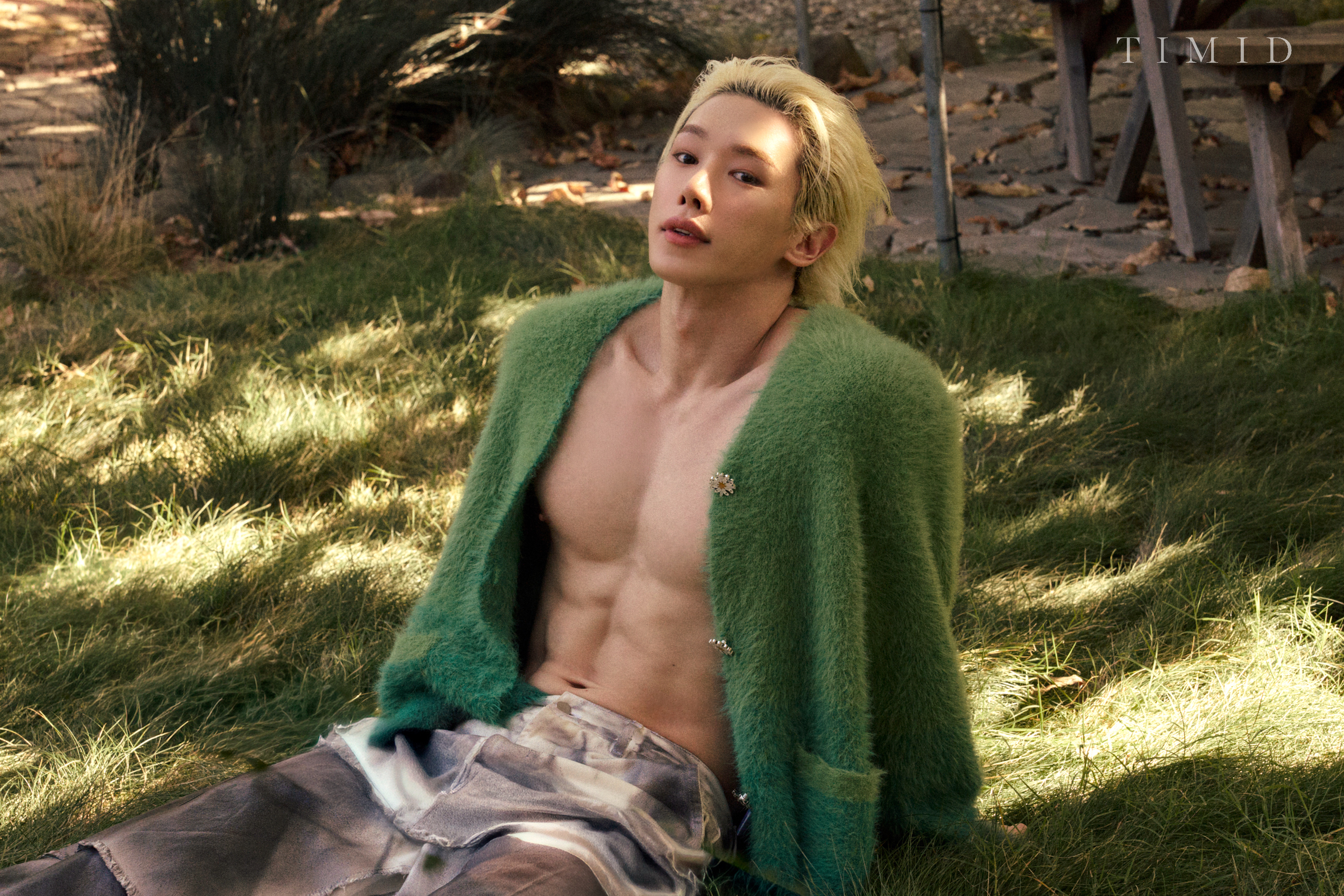
-
Talent: Supriya Ganesh @supriyaganesh_
Photos: Ken Medilo @kenmedilophoto
Fashion: Benjamin Holtrop @benjaminholtrop
Makeup: Carola Gonzalez @carolagmakeup
Hair: Eduardo Mendez @eduardomendezhair
Photo Assist: Joshua Medilo @joshua_w_mccoy
Fashion Assist: Emily K.E. Johnson @emilykejohnson, Rasheed Kanbar @rasheedmkanbar
Video Jonathan Ho @_jonathan_ho
Supriya Ganesh as Dr. Samira Mohan is the doctor I would want. As someone who deals with chronic health issues, I am perpetually acutely aware of the clinical clock and wondering if I’ll actually be heard. In The Pitt, Mohan is saddled with the nickname Slo-Mo for her refusal to truncate the patient experience. Yet, that slowness is her way of due diligence. She listens fully and makes people feel seen. By holding this space, she allows them to present their most authentic selves.
We see the stakes of this approach in season one, when Mohan treated a Black woman with sickle cell anemia; while colleagues made biased assumptions that dismissed her pain, Mohan’s kindness and refusal to rush validated a patient who is statistically the most likely to be overlooked.
This meticulousness is likely a byproduct of Ganesh’s own academic rigor. A Columbia University neuroscience graduate who scored in the 99th percentile on her MCATs, Ganesh was still tutoring future physicians while stepping into her breakout role. Ganesh’s performance beautifully captures the spectrum of a brilliant mind coupled with a soft heart.
However, season two complicates this altruism, revealing the erosion that occurs when a healer fails to extend that same grace inward. We witness Mohan grappling with a burgeoning burnout and fractured tensions with her mom, culminating in a devastating moment of public chastisement by her attending, Dr. Robby [Noah Wyle]. The rebuke makes Mohan question if she even belongs in her position at the hospital.
Like her character, Ganesh has also experienced doubts about belonging after numerous real-world instances of being repeatedly misidentified by the media. Through both Mohan’s journey and Ganesh’s own, the lesson becomes clear: it’s not just about seeing others, but about speaking up and allowing yourself to be seen, too. It is about extending that same patience and kindness from within. If more of us—doctors, journalists, and everyone in between—moved through the world the way Mohan does, by leading with care, performing our due diligence, and making room for people to exist fully as they are, perhaps more people would feel they belong exactly where they are.
Supriya Ganesh: Yeah, just wrapped. Crazy. Time makes no sense to me after being on the show because it’s so strange filming it hour by hour. But yeah, I think it’s been a week. I wrapped on Friday, and then I think the crew wrapped this Tuesday.
I feel really proud to have played a South Asian woman with so many hints of her mental health in her profession. Shabana and I talk about this, I think a lot of times with South Asian representation, there's this sense of as an audience, we want to see these people working, not feeling, which can be really restricting for an artist. So I feel really grateful that The Pitt as a platform lets you see the toll a job like this can take on a person, especially in the South Asian community. I feel like there's so much of a stigma around mental health at times, so it feels really great to pry her open like that.
SG: That’s such a great question. When I got this role and found out more about her, I made the decision that she’s someone who has a lot of care and empathy for her patients, but not so much for herself or the people closest to her. That’s also why she struggles in relationships that don’t fit into her work life.
It was really fun this season to explore a different side of her. In the first season, you get hints of it, but you don’t really see it. Here, you see both sides, especially in the first episode, where she’s swearing and being snappier—things she would never do with patients or superiors. She’s very different at work.
It’s also interesting to think about what women, especially those with marginalized identities, do to seem competent and professional—like the work voice you put on and take off. I wanted to make sure there was a contrast between her work life and her personal life.
With speaking Tamil on the phone, that was a decision I made with our showrunner Scott Gemmill. Samira lost her dad when she was about 13, and I think they spoke Tamil a lot together. She makes the decision to practice Tamil with her mom, even in contexts where English might make more sense. She really cares about maintaining that linguistic connection. So I made her a bit more fluent than I am, even though it’s my mother tongue. It was a great way to reconnect with the language, talk to my mom about phrasing, and work with a coach on set.

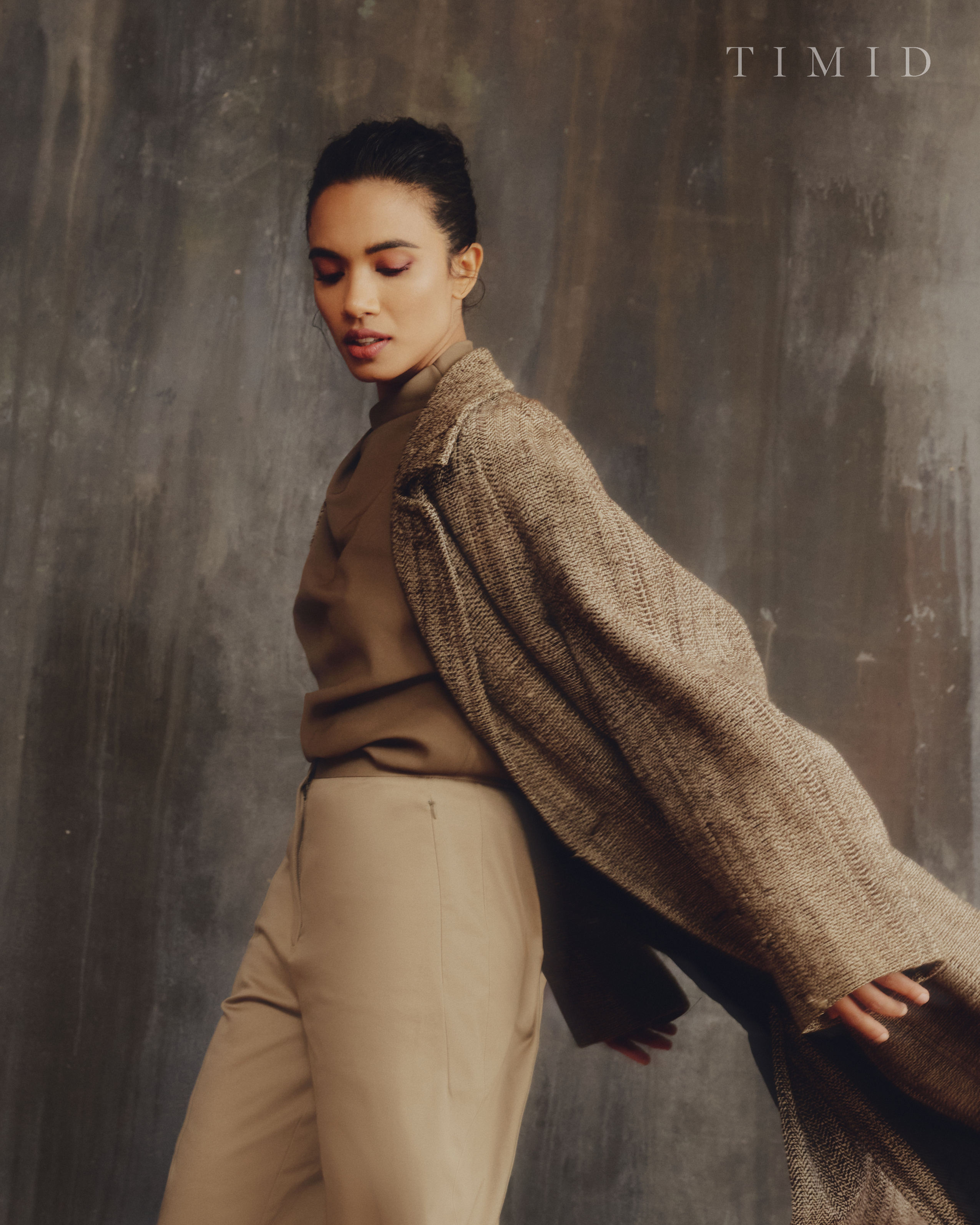
SG: One of the best things the show has given me is getting to know so many incredible women of color in the industry. It’s been such a lovely experience.
Sepi has been working in this industry for a long time, and I’m very new, this is my first lead role. The playbook that exists doesn’t always work for someone like me. It’s often oriented toward identities I don’t have access to. So meeting someone like Sepi, who has had such a wonderful career and stayed true to her artistry, has been incredibly freeing. I’m beyond grateful to have met her.
SG: I think it’s easy for Samira to click with her because they’ve worked together before. Dr. Al-Hashimi [Sepideh Moafi] has been a big influence on Samira’s approach as a physician. You can see similarities in how they approach patient care, especially in the first few episodes. It felt like a very natural dynamic to lean into because it mirrored what was happening in real life.
SG: What I am still, and always will be, geeked out by is the adherence to actual case studies. For example, the burr hole procedure Samira did in season one, that’s a real case. The doctor actually reached out to me like, “Hey, I did that,” and sent me the paper. Almost everything you see is based on a paper where the creative team followed the specifications outlined for the procedure. It’s something that really geeks me out because it’s nice not having to make the science work in an imaginary way. With my background, it’s easy to just go, “Oh, this is how it would be,” and just lean into that.
SG: I’m someone who is always a little over-prepared because of that. I really break down scenes at the formulaic level; I try to make sense of it in a way that is very intellectual, and then I have to try to let go of it. If I’m too in my head, I’m not in my body. But I will say this: the show has been really interesting because I’ve been able to play out the ways in which doctors perform. I don't know if people know this, but a lot of doctors, by the time they get to the level of having patients, have rehearsed with mock patients. Actors come in and play patients, and the doctors rehearse and get feedback.
That background really influences how I approach someone like Samira, who is trying to do everything by the book. Logically, every time she interacts with a patient, it’s going to be incredibly deliberate—almost like she’s done it a thousand times in her head just to make sure she’s doing everything right. It’s an interesting way to intellectually understand what this person’s life looks like up until this point, and how that bleeds into their daily interactions.
SG: I think she has more confidence because of the professional validation she got at the end of the mass casualty incident. Her relationship with Robby at the start of the season is a lot less contentious than it was. There’s still some tension there, but I had an imaginary thing built out: how many times has he come down on her in between? It’s leaning more towards not, because he trusts her more.
I looked at how she’s learned to manage that space between patients. When does she give in—or not give in—to her slow-mo tendencies? It was a very interesting way to build out everything she’s done, so that by the first day of filming, I could say, Okay, I think she’s more relaxed in this environment; she feels like she can loosen up.
Maybe she’s gone out with McKay [Fiona Dourif] for drinks a couple of times. Even if there isn’t a true friendship there, she’s tried to take that advice and decompress, though maybe not very well. I feel like she’s probably approaching decompression like a to-do list bullet rather than something actually restorative. It was really great for helping build all of those details out in between the seasons.

SG: I think a lot of these distinctions are really artificial. There’s so much intersectionality between these fields that people might resist because it feels a little scary, but science is art and art is science. Ideally, one should inform the other. Some of the best movies I’ve watched have this heavy sense of intellectualism blended into the art.
My perspective is just to do what you feel passionate about. I genuinely feel that passion for both the sciences and the arts, and I think following that intellectual itch is the best thing you can do, rather than feeling like everything needs to be in a box.
That was the biggest takeaway from my education. We had these crazy courses in college that combined the most unexpected subjects like the “neuroscience of film,” where you’d learn how to use neuroscientific studies to tell what type of film someone was watching. That is so interesting to me. It could even be a film concept, how someone tries to take data like that. To me, these distinctions are just a little silly; I’ve always found that one informs the other in a really cool way.
SG: I just watched Sentimental Value. I love that one, it’s so good. I also loved No Other Choice, because it’s so focused on being career-motivated to the point that it drives the characters insane. I think Samira really needs to watch those. Those would be my big two for her. One would be emotionally healing, and the other might make her step back and go, Huh, maybe my job shouldn't be the center of everything.
SG: It happened again with an article today, but to be on this show means the world. I can only think of the word “comrades,” and having people in this experience who are going through the same things I am. I can’t imagine how it would have felt if I were the only one with my identity experiencing the trials and tribulations of skyrocketing to a level of fame I’ve never known before. I am so grateful to have these people to hold me, and for us to hold each other. It’s a blessing; I truly don't know what I would have done without them.
The people are one of the best things this show has given me. There is a world where Shabana, Sepi, and I could have taken what the journalists are doing and transformed it into something ugly, treating each other poorly, but instead, we treat each other with love, support, and camaraderie.
I think most women of color are built to lift each other up. To have people look at that misidentification and just go, “Oh, fuck off, we know who we are,” and have it make us lean into each other rather than pull away... that’s the best feeling. We all feel stronger than what’s being thrown at us.
-
This interview is one in a series with the ensemble cast of The Pitt.