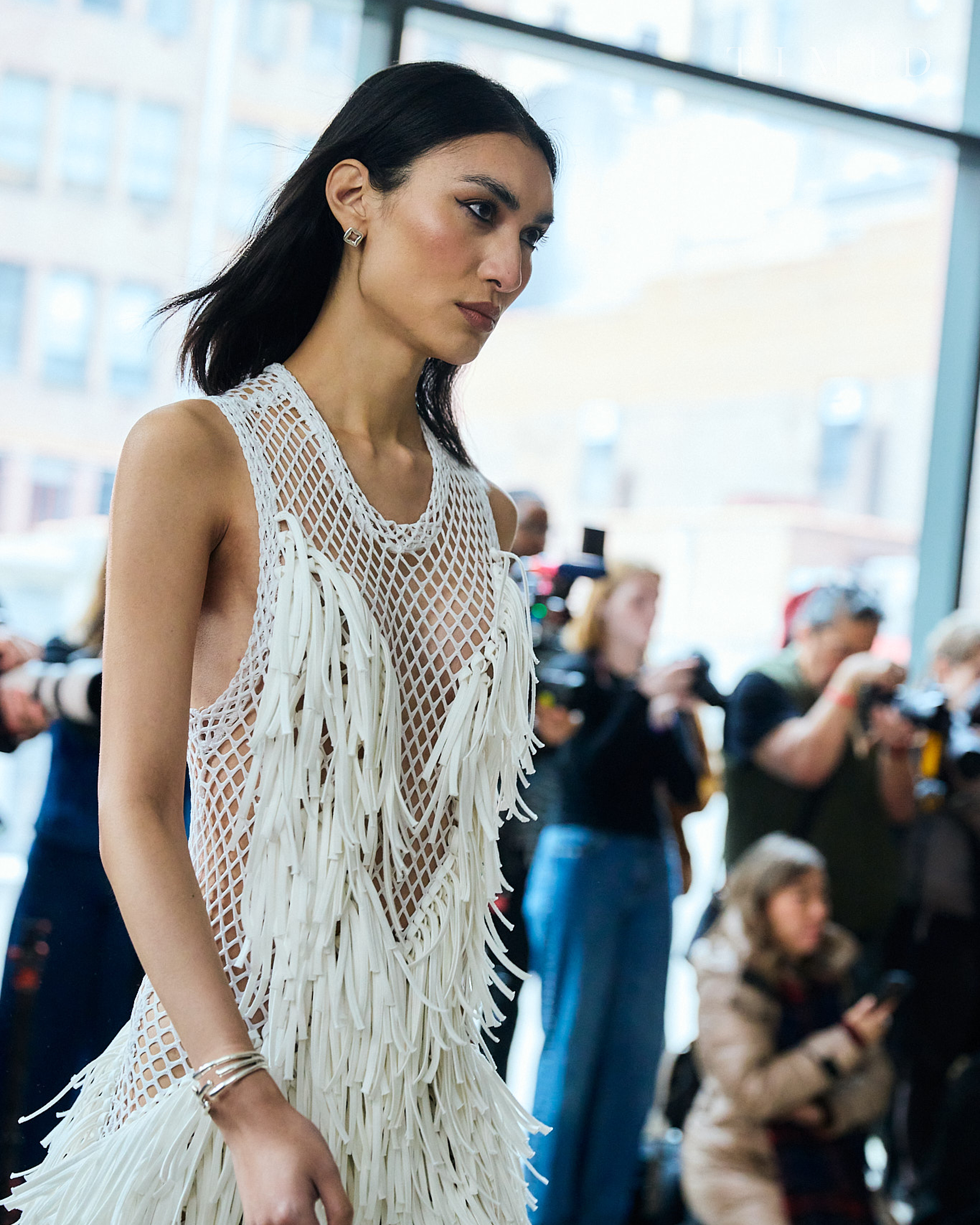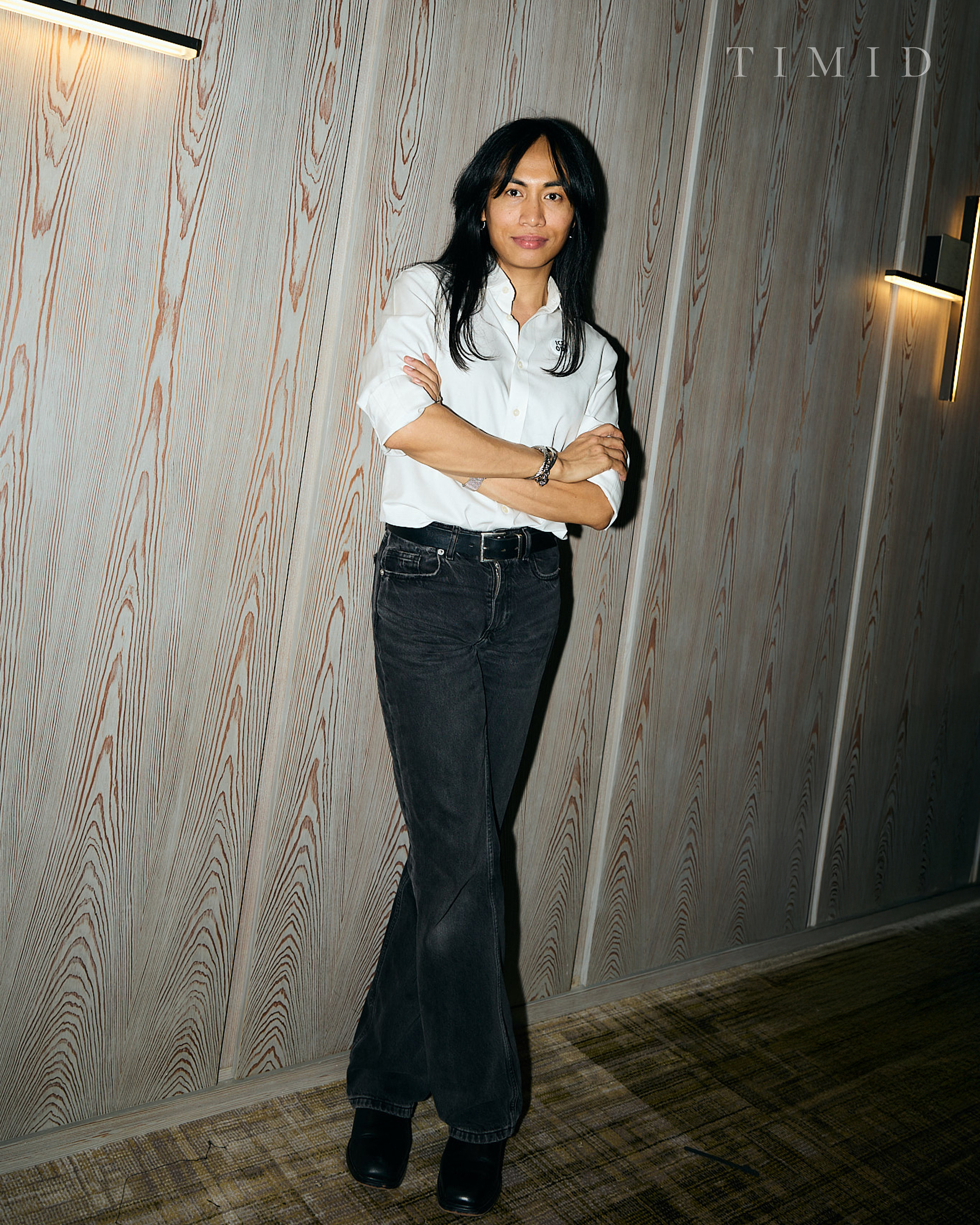
Somewhere in the world, a little girl is watching Project Runway on TV. She is sketching her first dress, hoping that one day, the world of fashion will make space for her. She may not know it yet, but she is following in Veejay Floresca’s footsteps.
Floresca once held that same dream while growing up in the Philippines, where imagining a place for herself in fashion was not always easy. She carried that dream across the ocean to the United States. Now, with her own brand and runway debut at New York Fashion Week, she is proof that you don't need to hide away any part of yourself to pursue your dreams.
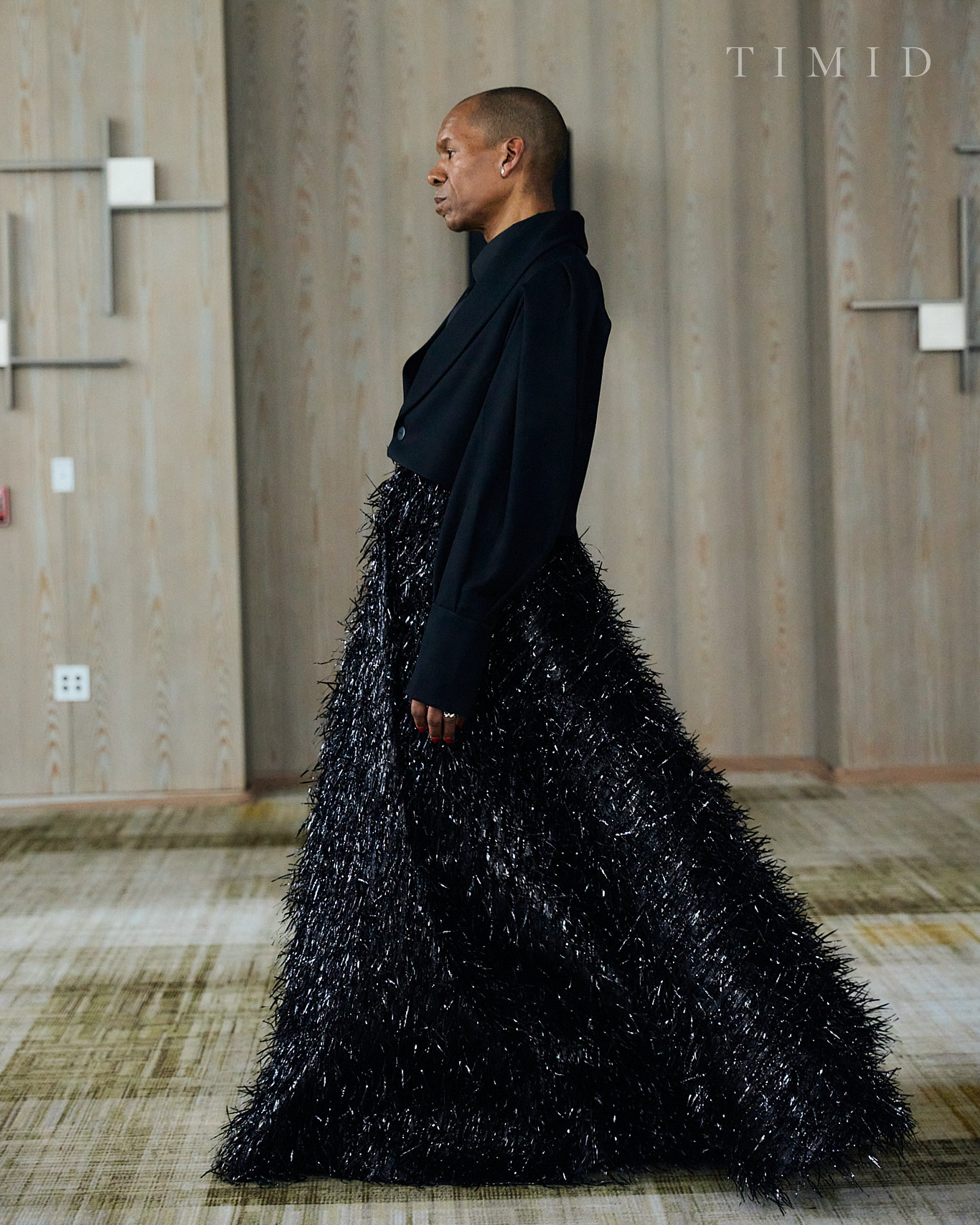
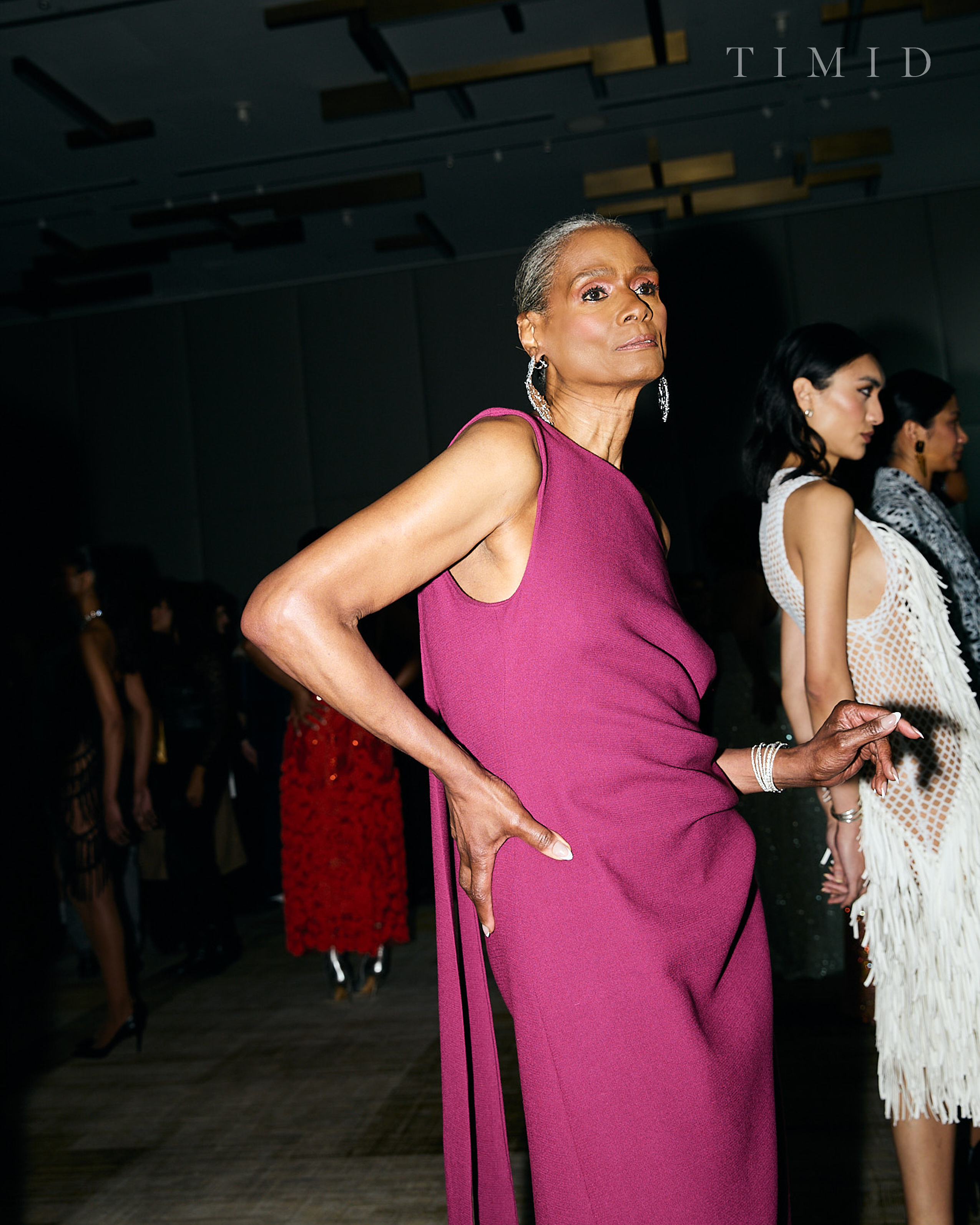
Her show closed with Tracey Norman, the first African American transgender woman to be widely recognized in the fashion industry, adding another layer of meaning to a deeply personal show. In conversation with Timid, Floresca reflects on her identity, craft, ambition, and the long path toward becoming the designer she once imagined.
Veejay Floresca: I'm actually very lucky to be in fashion, which is a safe space for people like me. Our community is embraced here. But more than anything, I've chosen to use my transness as a special power rather than a negative. Being trans means I can navigate femininity and masculinity in ways others can't, and you can see it in my work. My latest collection has pieces that read as both. A suit that a man and a woman can wear. That fluidity is part of my DNA as a brand.
VF: Growing up middle class in the Philippines where resources are limited forces you to be more creative—to find another way to manipulate fabrics, to create different textures. The Philippines is a deeply cultural country, with a rich tradition of handmade textiles, organic materials, and traditional costume. There's so much to pull from and reference. And Filipinos genuinely love fashion, especially for galas and weddings. That desire to feel special and to dress up has always informed how I work.
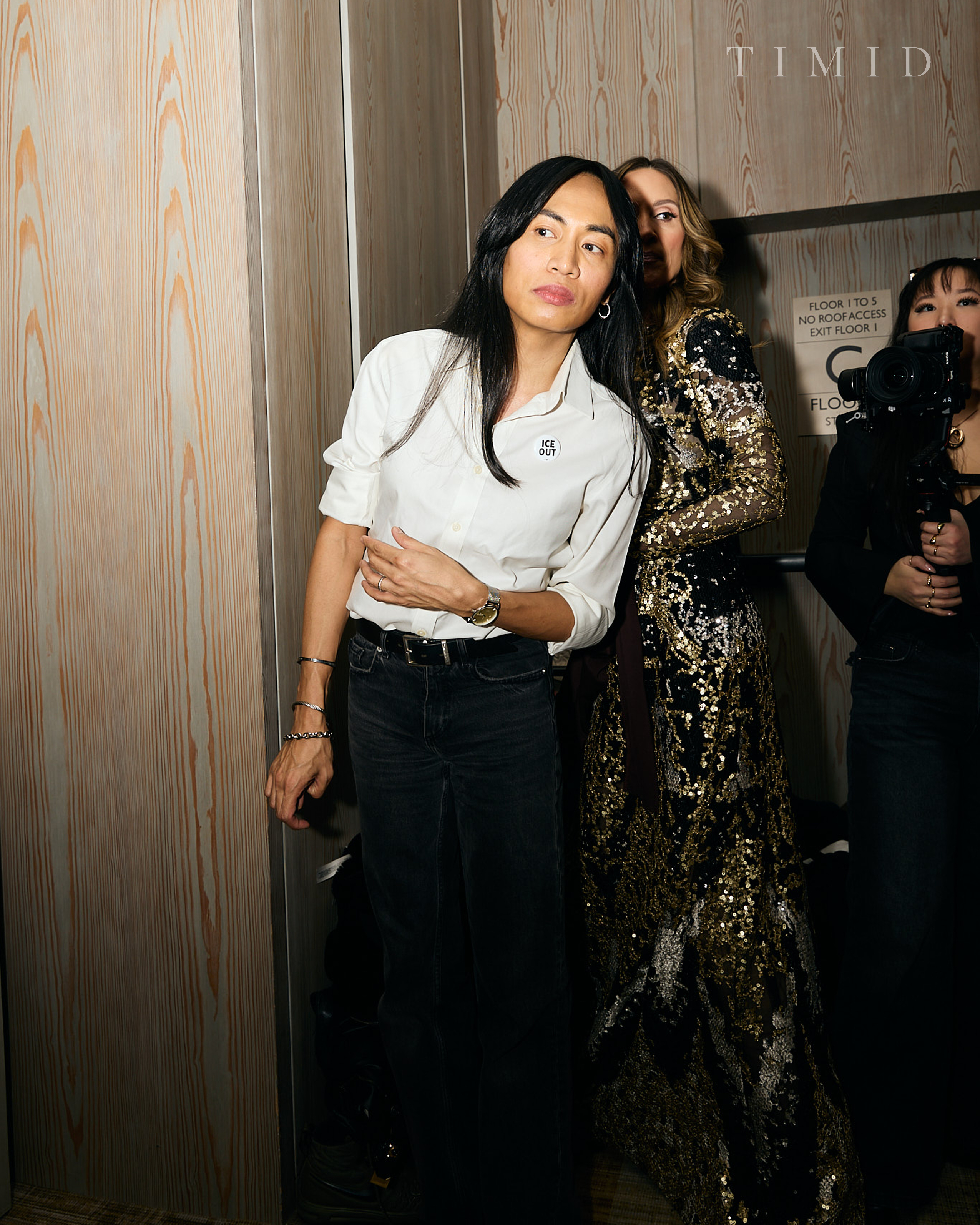
VF: Of course I still aspire to build something where people can add to cart and receive it in two to three days. But right now, I want to focus on what I'm good at. I am a skilled designer who works with different women, different age demographics, male and female, and slow fashion and custom work let me do that with intention. I get to know my clients. I ask them what they want. What style speaks to them. What makes them comfortable. Not many brands can do that, but I can. If I get investors or more funding, I'll explore ready-to-wear, but it will always be limited. There's already so much clothing in the world. Sustainable, slow fashion is still the direction I want to move in.
VF: I'm the queen of manifestation. How can you expect others to believe in you if you don't believe in yourself first? I believed I could be the first trans woman on Project Runway. I believed I could win it. It took 13 years, but I never let go of that. There will always be moments of doubt; constant rejection does that to you. But you have to reinvent yourself, discover your strengths, and keep going. I manifested it. And I got it.
VF: I was so happy when she said yes. Tracey is a trailblazer and an icon who opened doors for trans women like me. Her journey was completely different—during her time, she had to embrace her femininity in ways that weren't celebrated the way they are today. I wanted to honor that. When I was designing her dress, I made a decision: I want people to see her. Not the dress. The dress is secondary. She is Tracey. And that walk… that was a winning moment for me.
VF: My non-negotiable is always: I want to represent my people, my community, my clients. I don't work with size-zero models. The people who are "normal," who are actually paying for clothes—I want to show them. I work with clients who are 70, 45, with a size-40 waistline. And when I'm building a collection, I'm not thinking about impressing people; I'm thinking about making my models, my customers, feel good. Fashion is creating clothing that makes people feel beautiful. That's my non-negotiable.
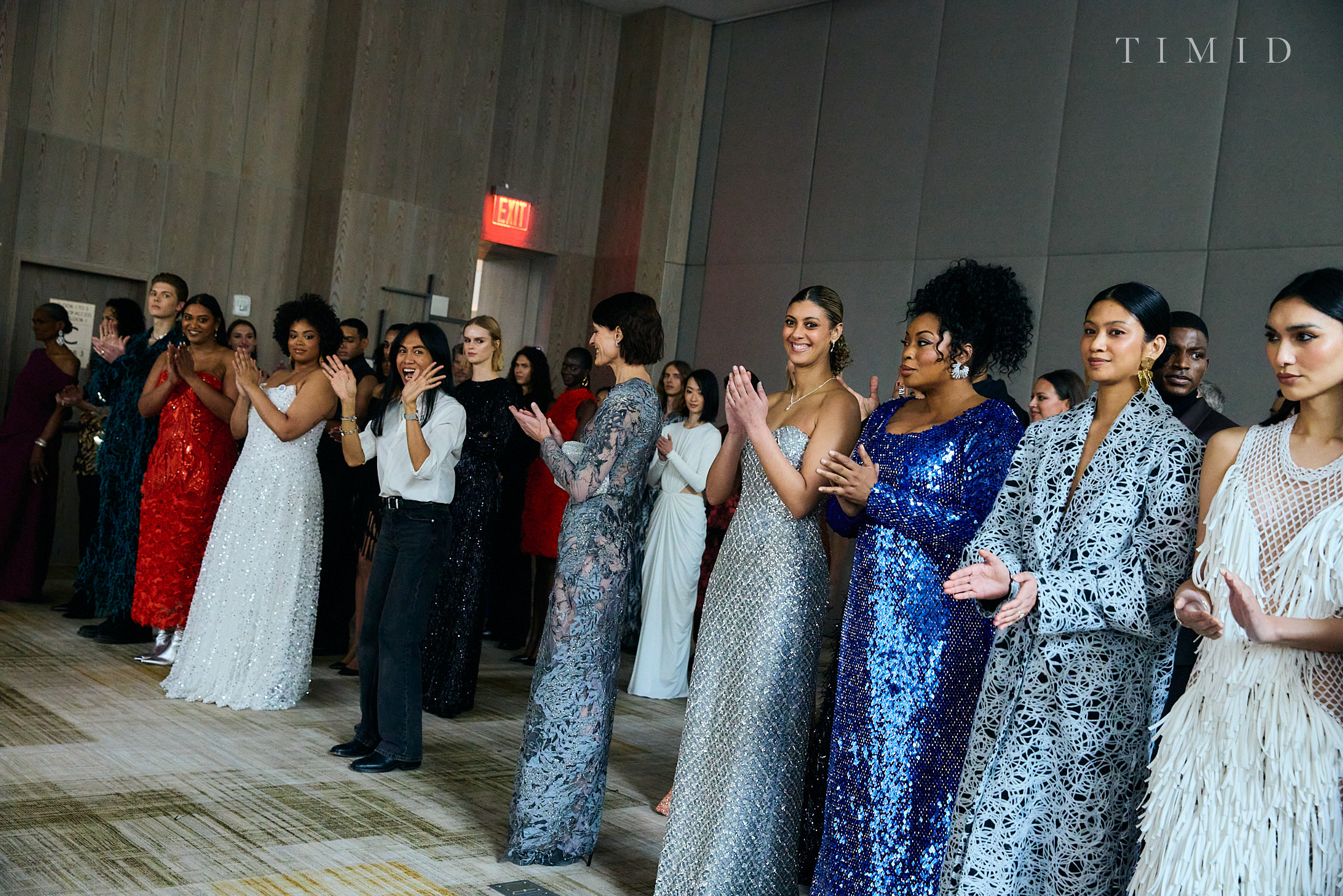
VF: I want to be remembered as the designer for the moments you never forget. "I'm receiving my first award, I want to wear Veejay Floresca." "I'm getting married, I want to wear Veejay Floresca." There's something so beautiful about a special occasion and remembering what you wore. The dress in your closet that you can't give away because of the memory behind it. That's the brand I want to build.
VF: Surround yourself with people who love you. It may be hard to change your country or your state, but you can choose your tribe. Career matters, but life is the most important thing. Second: it's not going to be easy, and you have to be ready to embrace that. Every successful person has a struggle behind them. Third: you can't be someone everyone loves, and that's okay. Stay true to who you are, because there will always be people who love you for exactly that. And finally: work hard, hustle, and be kind. Treat everyone equally, whether they're the CEO or the cleaner. People remember that.
VF: Dreams do come true. Sometimes it takes 10 years, 15 years, 20 years—but they do. I want people to remember me with that. If Veejay can do it, you can do it too. Who would have thought a trans woman from the Philippines could show at New York Fashion Week? Who would have thought a super fan of a show could actually win it? Dreams come true. You just have to hold on and never let go.