-
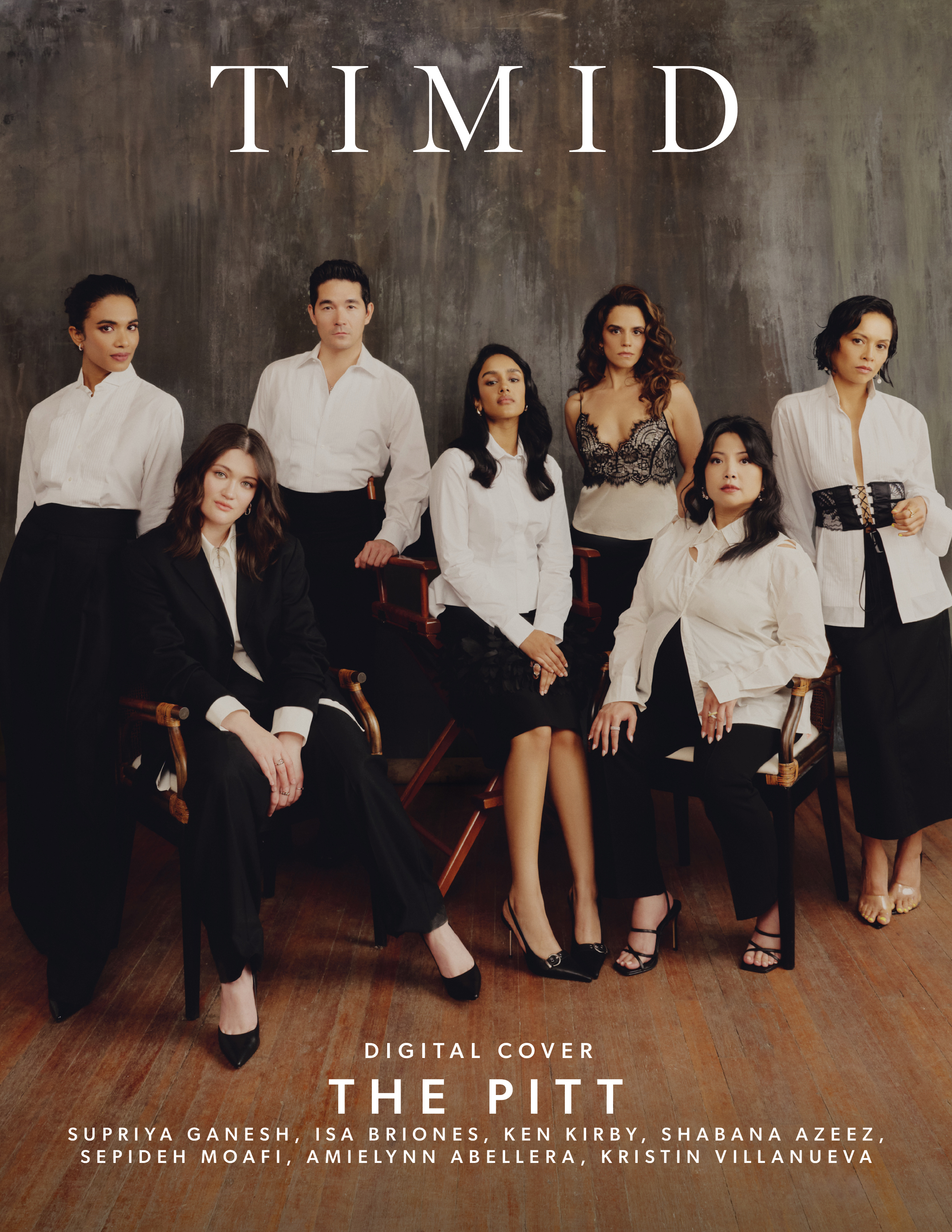
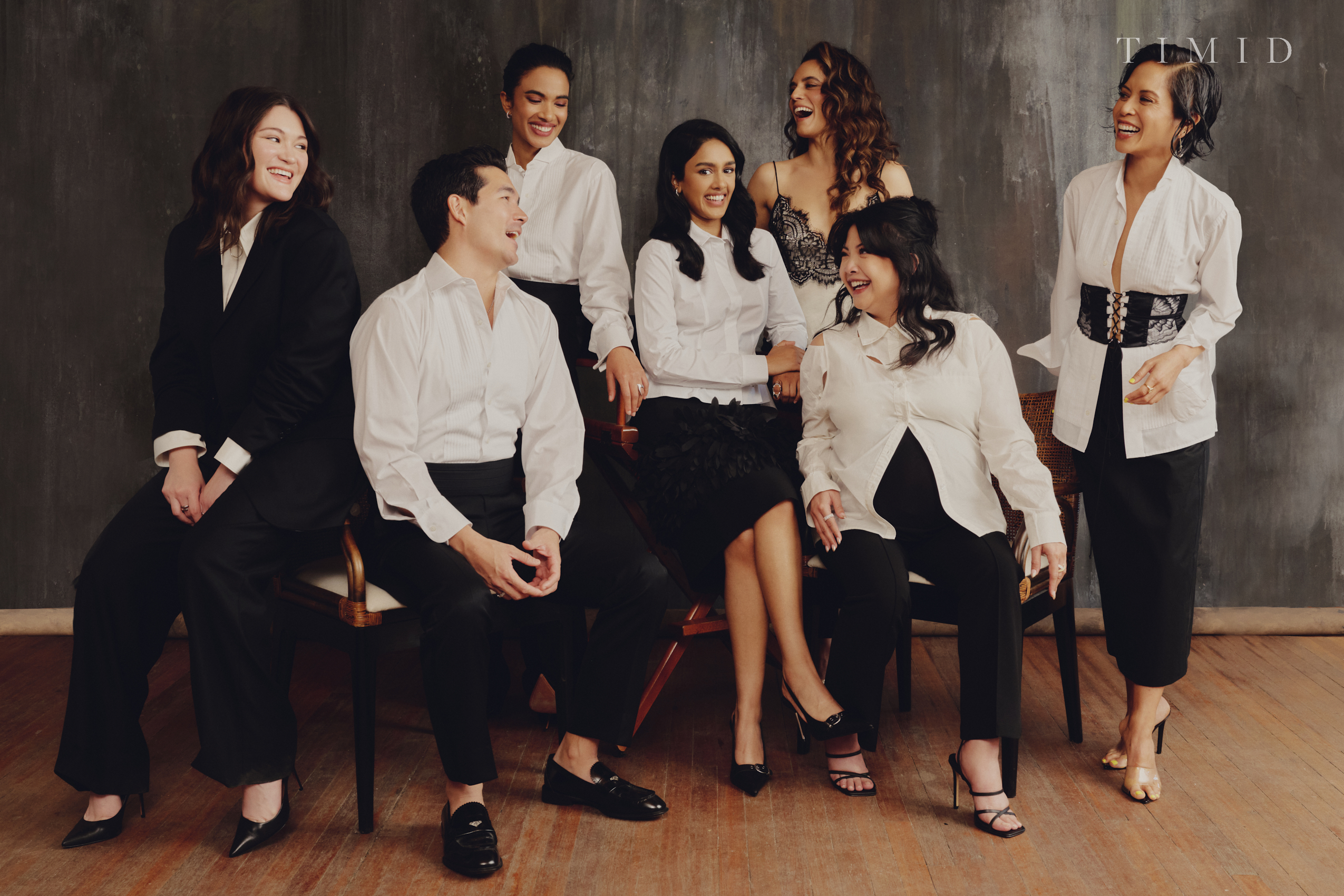
Talent: Supriya Ganesh @supriyaganesh_, Isa Briones @isacamillebriones, Ken Kirby @mrkenkirby, Shabana Azeez @shabanaazeez_, Sepideh Moafi @sepidehmoafi, Amielynn Abellera @amielynn.abellera, Kristin Villanueva @gutsnglam
Photos: Ken Medilo @kenmedilophoto
Fashion: Benjamin Holtrop @benjaminholtrop
Makeup: Hinako @nhinako_makeup, Katrina Klein @katrinakleinmakeup, Carola Gonzalez @carolagmakeup, Kym Nicole @kymmyizabeauty, Robert Bryan @robertti, Hannah Biddle @makeupartisthannah
Hair: Dallin James @dallin.james, Sabrina Porsche @sabrina.porsche, Eduardo Mendez @eduardomendezhair, Sharif Poston @sharifposton, Ian James @ianjameshair, Traci Garrett @tracilinngarrett Jorge Buccio @bucciojb
Photo Assist: Joshua Medilo @joshua_w_mccoy
Fashion Assist: Emily K.E. Johnson @emilykejohnson, Rasheed Kanbar @rasheedmkanbar
Video Jonathan Ho @_jonathan_ho
The Pitt is my comfort show.
It feels strange to say that about a series so visceral. In season two, a chest is cracked wide open in a frantic trauma bay. In another episode, maggots are revealed beneath a patient’s cast. Every episode unfolds in real time—one hour per shift, relentless and unblinking. Created by R. Scott Gemmill, John Wells, and ER veteran Noah Wyle, the series follows a team at the fictional Pittsburgh Trauma Medical Center. The format is deceptively simple, but it lends the show a suffocating immediacy. You exist alongside every mistake and every ounce of grace.
When I binged the first season, it felt like being inside a hospital for fifteen straight hours. That feeling hit especially close to home last year, when my family went through the most frightening stretch of our lives. Within weeks, my dad suffered a heart attack and was diagnosed with lung adenocarcinoma. What followed was a blur of consultations and impossible decisions. His heart complications and cancer created a medical stalemate: do you operate on the heart and risk weakening his body for the cancer fight, or treat the cancer and risk straining the heart?
Throughout this ordeal, The Pitt became a lens through which I processed our reality. I instinctively started to connect with the characters we are now featuring in Timid, reaching for their specific strengths to fill the voids left by a broken system and a broken me.
I often felt like a surrogate for Shabana Azeez’s character, Victoria Javadi—the young, prodigious medical student tasked with managing high-stakes patients before she can even legally drink. I went into full journalist mode, sitting in on every meeting I could, transcribing medical jargon and hunting for survival statistics as if the right set of notes could solve the unsolvable. In my father's case, we sought a second opinion at Swedish Medical Center, then a third, and finally a fourth from Dr. Zhang at MD Anderson in Houston, the top cancer hospital in the country. Yet, even there, no right answer existed. For someone like me, who treats every problem as a puzzle to be solved, the certainty of that uncertainty was terrifying. I tried to channel Javadi; she contains multitudes of textbook intellect with a hopeful optimism.
Beyond its surgical precision during under the knife scenes, The Pitt does a remarkable job of exposing the fractured politics and weakening levers of a crumbling healthcare system. This becomes a focal point in season two with the introduction of Sepideh Moafi’s character, Dr. Baran Al-Hashimi. As a new attending who shadows Dr. Robby, she tirelessly pushes for systemic efficiency—advocating for AI technology to streamline patient intake and charting.
I was operating in a similar orbit while managing my dad’s care. I would transcribe every doctor's meeting with AI tools before charting the results myself—tailoring the complex medical jargon into updates for family, friends, and our own circle of doctor contacts.
I wished an advocate like Al-Hashimi could have been there to fight the silos my dad was trapped in. I watched as specialty teams failed to communicate while his life hung in the balance; in one instance, an oncologist hadn't even received his latest scans from radiology. That specific breakdown in communication almost impeded a breakthrough: upon finally reviewing them, they discovered a cellular mutation that became the key to his targeted treatment. Another absurdity was when we were told a blood test would cost $20,000 inside the hospital, but would be fully covered if my dad simply walked out the front doors and checked back in.
As my dad’s progress faltered and we hit wall after wall. People would ask how I was doing, I’d always just say, "I’m processing my processing." In those moments, I understood Isa Briones’s Dr. Trinity Santos more than ever.
Santos is an unequivocally capable doctor, but she has a hard time letting people in, choosing instead to guard her vulnerability. She has defense mechanisms and when she feels cornered or overwhelmed, she lashes out. I recognized that same pattern in myself—the way my anger and feeling of leeching helplessness would simmer beneath the surface before finally reaching a breaking point. I found myself exploding, similar to that same friction Santos endures in the pressure cooker of the hospital.
Even outside the hospital walls, the weight of the diagnosis followed me home in tiny, jagged reminders. The sudden appearance of a cancer cookbook on the kitchen counter domesticated and calcified the abstract nightmare of his illness. In season two, Kristin Villanueva’s character, Nurse Princess Dela Cruz, has a poignant line about going home after a grueling shift to watch Love Island. Princess is a stellar nurse and a polyglot fluent in six languages—including her native Tagalog, English, and French—but she is also a professional who understands the vital importance of decompressing and not taking the trauma of work home with her.
For my dad and me, one of our shared languages has always been television. I randomly decided to put on an old episode of Iron Chef America—the one where Seattle chef Tom Douglas beats Iron Chef Morimoto in Battle Salmon. The series has been a favorite of mine since I was little, something my dad would always watch with me even though he didn’t share my obsession with food. It was this exact episode that made me a Tom Douglas fan as a kid; my dad even took me to his flagship restaurant, Dahlia Lounge, when I was thirteen.
As the episode played, my dad did something rare. Usually, he becomes absent-minded when his focus is buried in the blue light of his electronics. Talking to him in those moments feels like sending a radio signal out into deep space; you call his name and wait five minutes for the signal to bounce back for him to finally register your presence. But this time, the signal landed instantly. He closed his laptop, rolled his chair over, and just sat there, watching the screen with me. Cancer was still looming, but like Princess, we had to find a way to decompress.
There was a period of agonizing limbo until one Monday afternoon at 3pm. My phone rang, and seeing my entire family on the caller ID told me everything before I even picked up. We were told to prepare to say our goodbyes. Just days earlier, we were discussing his discharge; now, my dad was being prepared for intubation.
I had never heard my dad sound that scared. He has always been our source of stability in a family that isn't overly emotional. I had never heard him cry until that call. He tried to reassure me, but his voice broke. I didn’t believe him. I knew he didn't believe himself either. In the back of my mind, I kept returning to a scene from The Pitt where Dr. Robby teaches a family the “Hawaiian goodbye,” the practice of Hoʻoponopono: I love you. Thank you. I forgive you. Please forgive me. I remember wondering if those were the words I should say—if four sentences could ever be enough to encapsulate a lifetime.
Ultimately, the tide turned. A specialist at UW Medical Center—fittingly, a teaching hospital, placed stents in my dad’s heart, successfully avoiding major surgery. He was nonchalant, noting he’d done hundreds of these and that it was easy compared to open-heart surgery. His demeanor reminded me of Ken Kirby’s character, Dr. John Shen, who is famously chill and casual, but always a total pro. The nurse who cared for him after that operation turned out to be someone I went to high school with. Thank you, Sara Park. In her, I saw the traits of Amielynn Abellera’s Nurse Perlah Alawi: gentle, kind, and foundational in her faith.
When we moved his care to the Fred Hutch Cancer Center, we met his specialized oncologist, a South Asian woman named Dr. Menon. Our first meeting lasted nearly two hours as we filled her in on every detail of his journey. More than any other character on the show, I am most thankful for Supriya Ganesh’s Dr. Samira Mohan. An experienced resident known for her immense empathy, she is teased with the nickname “Slo-Mo” because she spends too much time with her patients. But Samira is exactly the kind of doctor I’d want for myself, and she was the kind of doctor I wanted for my dad. In those two hours with Dr. Menon, I saw Samira’s virtues in action. Dr. Menon identified a targeted treatment—an oral medication he takes to manage the cancer. He’s okay now.
The Pitt grounded me. Since its debut, the series has won numerous awards, including the Critics Choice, Emmy, and Golden Globe for Best Drama, and it has recentered the global conversation around the cardinal role of healthcare workers. The series honors the reality that, just like in real life, not everything comes with a quick fix, but humanity and compassion can be a literal lifeline.
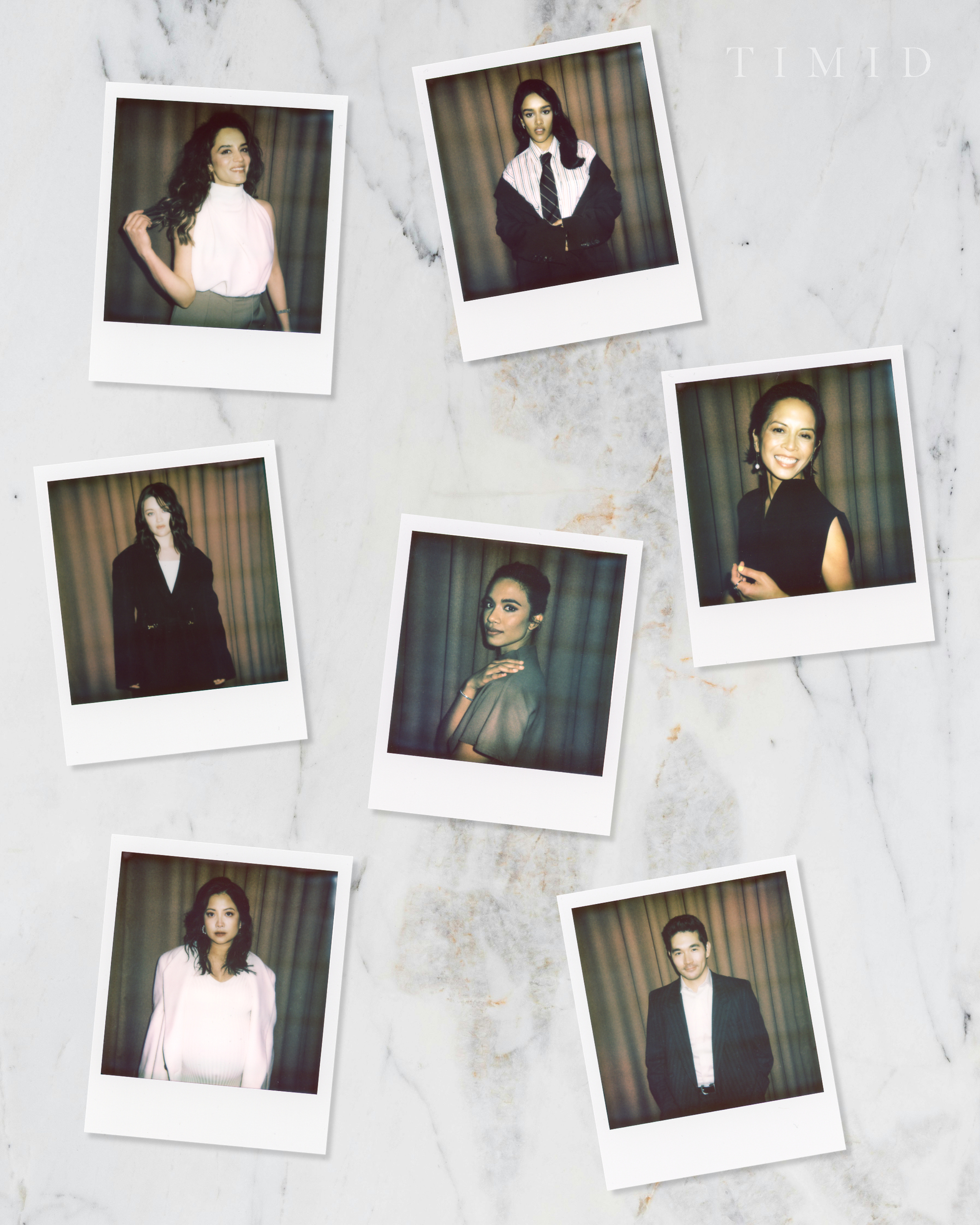
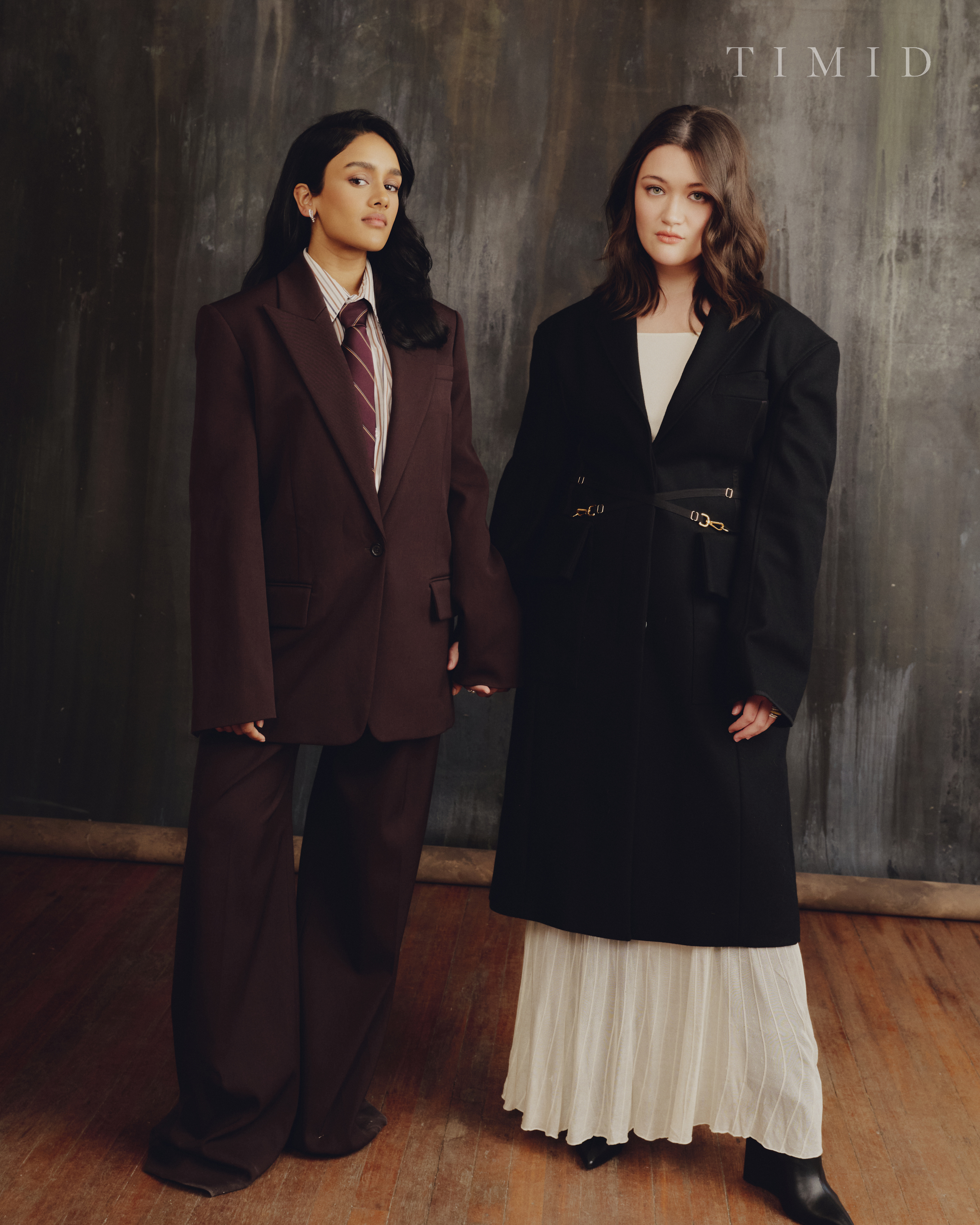
For Timid, it is a profound honor to spotlight the Asian talents behind a show that meant so much to me. Please meet Ken Kirby (Dr. John Shen), Amielynn Abellera (Nurse Perlah Alawi), Kristin Villanueva (Nurse Princess Dela Cruz), Isa Briones (Dr. Trinity Santos), Shabana Azeez (Victoria Javadi), Supriya Ganesh (Dr. Samira Mohan), and Sepideh Moafi (Dr. Baran Al-Hashimi).